
 EN
EN
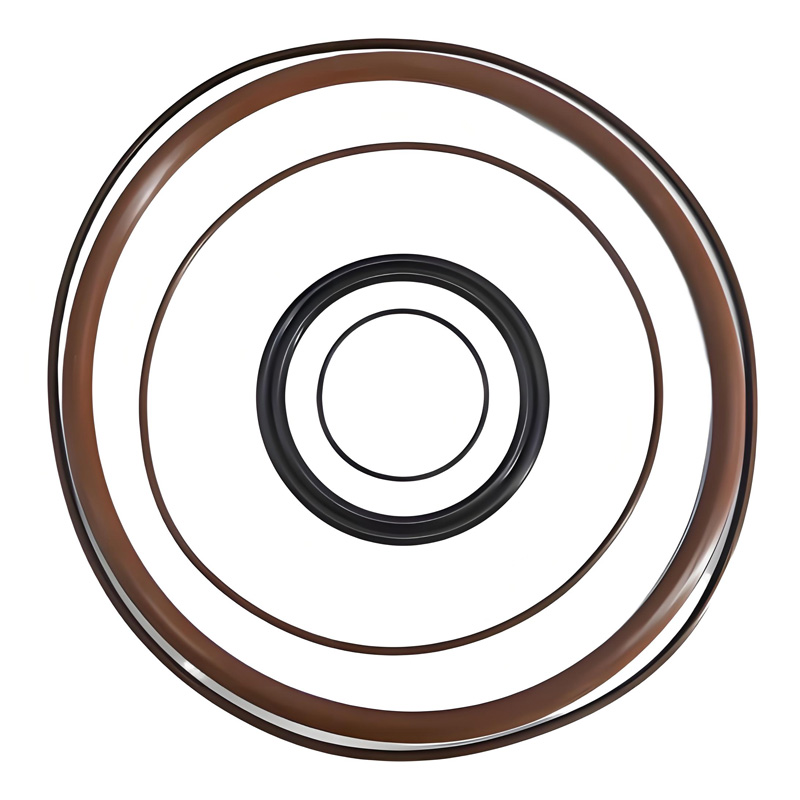
The o ring seal stands as one of the most versatile and widely adopted sealing solutions across industrial, hydraulic, pneumatic, and aerospace applications. This prominence is no accident. The o ring seal has earned its position through decades of proven performance, exceptional reliability, and remarkable adaptability to both static and dynamic joint environments. Understanding why the o ring seal dominates these applications requires examining the fundamental design characteristics, material properties, and operational principles that make this simple yet ingenious component so indispensable in modern engineering.
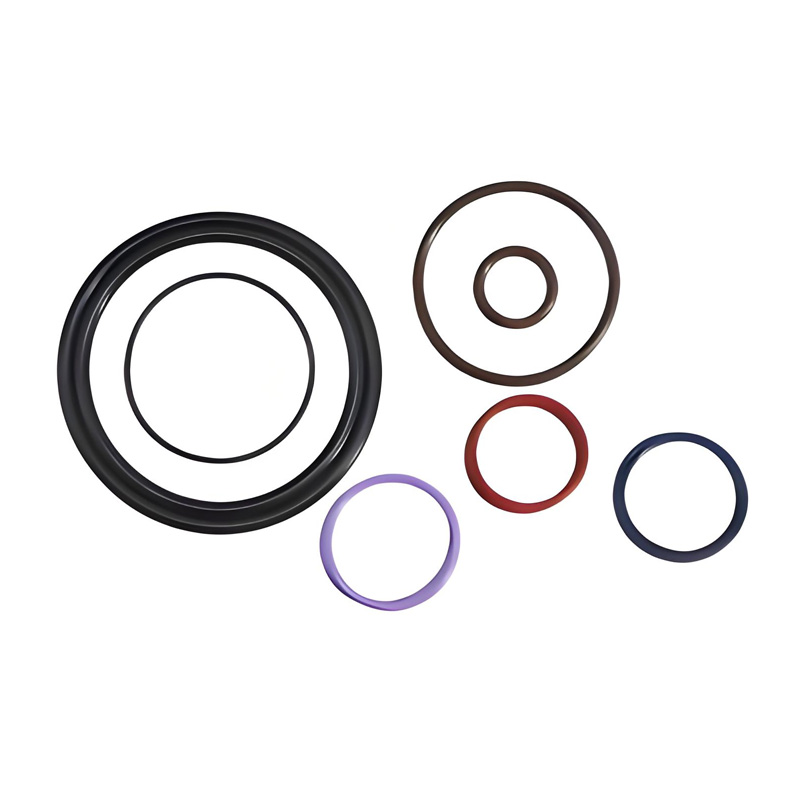
Whether sealing a static pump housing or maintaining pressure in a dynamic reciprocating rod application, the o ring seal delivers consistent performance that engineers have learned to trust. The fundamental reason for this universal adoption lies in the elegant simplicity of the o ring seal design combined with its sophisticated material science. This article explores the engineering principles, practical advantages, and operational contexts that explain why the o ring seal has become the industry standard for sealing critical joints in virtually every industrial sector.
Design Simplicity and Material Versatility
The Fundamental Geometry of O Ring Seal Performance
The o ring seal achieves its remarkable versatility through an elegant circular cross-section geometry that requires no complex manufacturing processes or specialized tooling. This simplicity does not diminish its functionality; instead, the o ring seal provides superior sealing across varied conditions through its inherent design flexibility. The circular profile of the o ring seal naturally distributes applied pressure uniformly around its perimeter, creating a consistent sealing interface that responds predictably to pressure changes. When properly installed, the o ring seal compresses into the groove with pressure-dependent elasticity, expanding and contracting to maintain contact with sealing surfaces even as operating conditions fluctuate. This adaptive behavior explains why the o ring seal performs equally well in static applications where minimal movement occurs and in dynamic applications where continuous relative motion demands active sealing throughout the duty cycle.
Elastomer Materials That Drive O Ring Seal Effectiveness
The material composition of the o ring seal determines its operational envelope and compatibility with specific media. Nitrile rubber remains the most widely specified material for o ring seal applications due to its balanced performance across temperature ranges, excellent resistance to mineral oils, and cost-effectiveness that makes the o ring seal accessible for high-volume industrial applications. For demanding thermal environments or specialized fluid compatibility, the o ring seal can be manufactured from fluorocarbon, EPDM, silicone, or polyurethane, each formulation enabling the o ring seal to function reliably in distinct operational contexts. The elastomeric nature of the o ring seal material enables compression set resistance, meaning the o ring seal maintains its sealing force over extended service periods rather than permanently deforming under load. This material resilience directly contributes to the extended service life that makes the o ring seal economical compared to alternative sealing technologies.
Static Application Excellence and Pressure Handling
Stationary Joint Sealing Advantages of the O Ring Seal
In static applications where components remain fixed relative to each other, the o ring seal excels through its ability to create durable, leak-free interfaces that withstand pressure without degradation. Static applications represent the simplest operational context for the o ring seal, yet even here, the design delivers significant advantages over alternative sealing approaches. When pressure is applied to a stationary o ring seal, the material compresses uniformly into the groove geometry, developing a metal-to-elastomer contact that increases with applied pressure. This pressure-dependent sealing action means that higher system pressures actually improve the sealing capability of the o ring seal rather than compromising it, a characteristic that proves invaluable in hydraulic systems operating at pressures exceeding 300 bar. The o ring seal maintains this sealing force indefinitely in static conditions, making it ideal for reservoirs, manifold blocks, threaded connections, and pump casings where reliability and minimal maintenance requirements prove essential. Industrial facilities appreciate the o ring seal precisely because static installations can function for years without attention once properly installed.
Pressure Retention and Groove Design Integration
The effectiveness of the o ring seal in static joints depends substantially on proper groove design and installation practices that ensure the seal engages correctly with the mating surfaces. An undersized o ring seal will fail to develop adequate contact pressure, resulting in leakage that compromises system performance and safety. An undersized o ring seal lacks the compression necessary to respond to pressure fluctuations, allowing fluid bypass around the seal surfaces. Conversely, an oversized o ring seal may experience excessive compression that accelerates material fatigue and shortens service life. Engineers achieve o ring seal optimization through standardized groove dimensions, material hardness specifications, and installation guidance that ensure predictable performance across applications. When the o ring seal is correctly sized and positioned, the design ensures that pressure increases actually enhance sealing performance, creating a self-energizing effect that increases the margin of safety in static joints. This elegant characteristic explains why the o ring seal remains the first choice for high-pressure static sealing from hydraulic systems to cryogenic equipment.
Dynamic Operation and Reciprocating Motion Capability
How O Ring Seals Function Under Continuous Motion
Dynamic applications introduce motion between seal and sealing surfaces, creating conditions where the o ring seal must maintain sealing integrity while accommodating movement that could permit leakage. The o ring seal accomplishes this challenging task through the combination of material elasticity and groove geometry that permits controlled deflection without loss of sealing contact. As a rod moves within the o ring seal groove, the material compresses on the pressure side while expanding on the return side, following the motion while maintaining pressure-dependent sealing force. This continuous cycling of the o ring seal does not degrade performance immediately; instead, the design handles millions of cycles before wear becomes significant. The o ring seal exhibits this remarkable durability because elastomeric material naturally recovers from temporary deformation, resuming its original shape once the deflecting force is removed. Engineers designing reciprocating systems rely on this dynamic capability of the o ring seal to maintain consistent sealing throughout extended service intervals, eliminating frequent maintenance disruptions that would occur with inferior alternative seals.
Temperature Cycling and Extrusion Prevention in Dynamic Seals
Dynamic applications expose the o ring seal to temperature variations that accompany pressure changes and friction from continuous motion, creating thermal stresses that simpler seal designs cannot withstand. The elastomeric formulation of quality o ring seal products includes additives that enhance thermal stability, permitting reliable operation across temperature ranges from minus forty to plus one hundred degrees Celsius in standard applications. High-temperature o ring seal variants extend this capability substantially, enabling operation in cryogenic systems and high-temperature industrial equipment where conventional seals would fail completely. Extrusion represents a potential failure mode in high-pressure dynamic applications where a gap between rod and bore allows the o ring seal material to be forced into the clearance space under pressure. Modern groove designs incorporate anti-extrusion rings or backup rings that prevent this failure mechanism, protecting the o ring seal from material displacement that would terminate sealing capacity. By addressing this technical challenge through proven design practices, manufacturers have made the o ring seal viable for extremely demanding dynamic applications including high-pressure injection systems, aerospace actuators, and process equipment operating at severe temperature extremes.
Cost-Benefit Analysis and Industry Standardization
Economic Advantages That Drive O Ring Seal Adoption
The widespread adoption of the o ring seal reflects not only technical superiority but also compelling economic advantages that make this seal the default choice across diverse industrial sectors. Standard o ring seal sizes are manufactured globally by countless suppliers, creating intense competition that drives pricing to levels substantially lower than proprietary seal designs. A single o ring seal costs pennies to purchase in production volumes, yet provides sealing performance that alternative designs might deliver only at substantially higher cost. The simplicity of o ring seal installation reduces labor time and training requirements compared to complex sealing assemblies requiring specialized tools or expertise. Inventory management favors the o ring seal because standardized sizes accommodate numerous applications, reducing the variety of seal types required in maintenance stockrooms. When an o ring seal fails, replacement takes minutes, minimizing downtime and emergency repair costs that could prove catastrophic in continuous-operation industrial settings. These economic factors combine to make the o ring seal the most cost-effective sealing solution across most industrial applications, explaining the universal preference expressed by maintenance personnel and design engineers.
International Standards and Compatibility Benefits
The o ring seal benefits from comprehensive international standardization through ISO specifications and national standards that ensure dimensional consistency and material quality across manufacturers worldwide. This standardization means that an o ring seal purchased from any qualified manufacturer will function interchangeably with products from competitors, eliminating vendor lock-in and supply-chain vulnerability. Engineers designing equipment can confidently specify standard o ring seal sizes knowing that replacement products will be available globally for the entire operational life of the equipment. Standards also define material specifications, hardness ranges, and performance requirements that ensure minimum quality levels regardless of manufacturing location. This standardization advantages the o ring seal compared to proprietary seal designs that may become obsolete when manufacturers discontinue products or exit markets. Industries appreciate the o ring seal precisely because this standardization provides long-term product availability, price stability, and technical consistency that enables confident equipment design and reliable maintenance planning.
FAQ
Can an o ring seal be used in both static and dynamic applications without modification?
Yes, the same o ring seal design can function effectively in both static and dynamic applications, though optimal performance may require groove design variations. Static applications prioritize simple compression, while dynamic applications benefit from anti-extrusion provisions and backup rings. The core o ring seal material and geometry remain unchanged; only the groove configuration adapts to the specific application. This versatility makes the o ring seal exceptionally practical for equipment designs incorporating both sealed chambers and moving components.
What temperature range does a standard o ring seal withstand?
Standard nitrile o ring seals operate reliably between minus forty and plus one hundred degrees Celsius, covering the vast majority of industrial applications. Specialized formulations extend this range considerably, with fluorocarbon o ring seals functioning from minus twenty to plus two hundred degrees Celsius, and silicone variants acceptable at even higher temperatures. For cryogenic applications, specialized o ring seal materials maintain elasticity at temperatures near absolute zero. Selecting the correct o ring seal material ensures reliable sealing across your specific temperature operating envelope.
How frequently should o ring seals be replaced in dynamic applications?
Replacement intervals for an o ring seal in dynamic applications depend on pressure, temperature, motion frequency, and material compatibility with the sealed fluid. Well-designed dynamic systems can achieve service intervals exceeding one year or covering millions of cycles before o ring seal replacement becomes necessary. Monitoring for gradual pressure loss or fluid leakage helps determine when o ring seal replacement is approaching. Preventive maintenance schedules typically recommend o ring seal inspection at regular intervals, with replacement performed before sealing degradation develops into system failures.