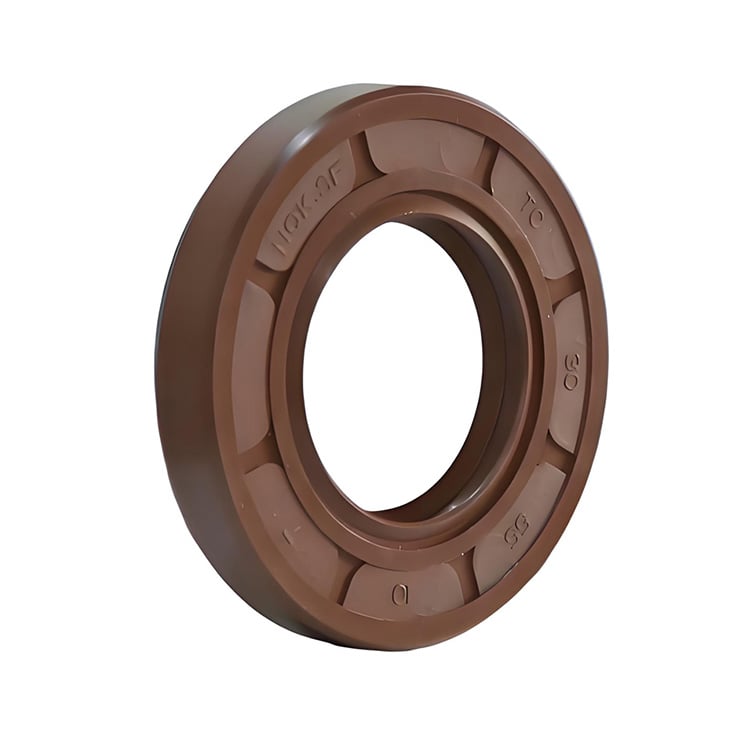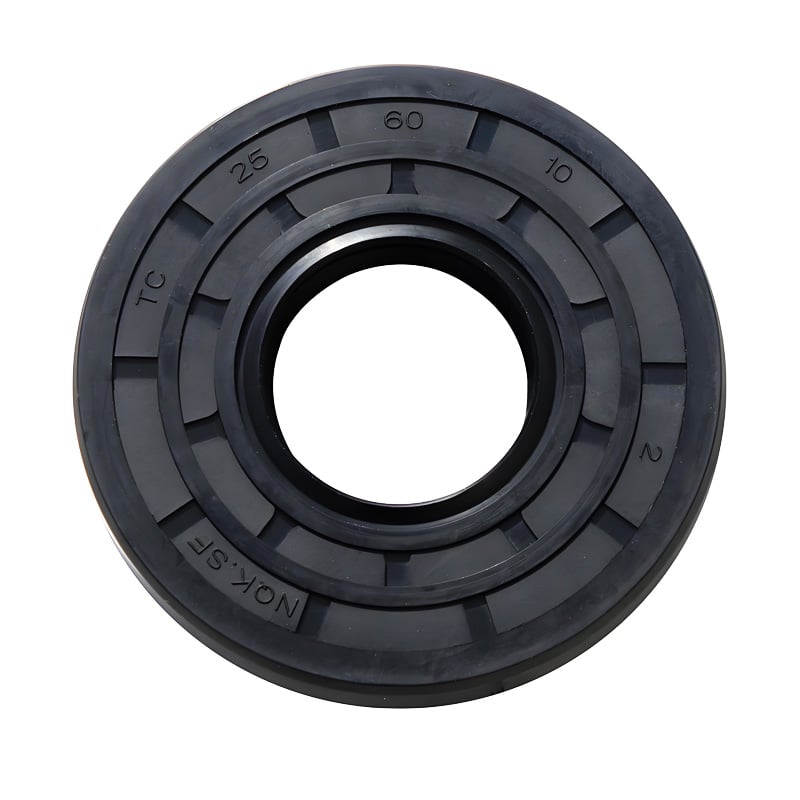

Two oil seals can both be described as FKM (fluoroelastomer), yet their published temperature limits may be noticeably different. For buyers comparing quotations, this can make it difficult to determine which specification is more reliable.
The reason is that FKM does not refer to one universal rubber formulation. Different FKM grades and compound designs can have different thermal properties. In addition, suppliers may use different methods to describe their temperature limits.
The Material Name Does Not Tell the Whole Story
FKM is a family of fluoroelastomers commonly used in sealing applications involving elevated temperatures, oils, fuels, and certain chemicals.
However, the final performance of an FKM seal depends on more than the generic material name. Polymer composition, curing system, fillers, additives, and manufacturing conditions all influence the properties of the finished compound.
Some formulations are designed to provide a balance of heat resistance and general-purpose sealing performance. Others are developed for particular fluids, chemical environments, or more demanding temperatures.
FFKM, or perfluoroelastomer, is another material family with different characteristics. It should not be treated as simply a higher-temperature version of every standard FKM compound.
For this reason, comparing two products by the label "FKM" alone does not provide enough information.
A Temperature Limit Needs a Definition
One of the most important questions to ask a supplier is whether the published temperature refers to continuous operation or short-term exposure.
Continuous operating temperature describes the intended service range under specified conditions over an extended period. A short-term temperature limit applies only to limited exposure and should not be used as the expected long-term operating temperature.
The surrounding medium also matters. A rubber compound exposed to hot air may behave differently from one continuously exposed to engine oil, fuel, or another chemical fluid.
Hallite's material compatibility data, for example, distinguishes between continuous and intermittent temperature limits and also shows that allowable temperatures vary with the operating fluid.
What Should Buyers Compare?
When evaluating FKM oil seals, look beyond the maximum temperature printed on a product description.
Ask the supplier:
Which FKM grade or compound is being used?
What is its recommended continuous operating temperature?
Is the stated maximum temperature continuous or intermittent?
Has compatibility with the actual operating fluid been considered?
Are compound-specific technical data available?
The application itself must also be evaluated. In a rotary shaft oil seal, friction at the sealing lip can generate local heat. The actual temperature around the lip may therefore be different from the general equipment temperature.
Choose the Compound for the Application
A higher temperature rating does not automatically mean that an FKM seal is more suitable. A compound must also provide the required fluid compatibility, elasticity, wear resistance, and sealing performance.
For buyers, the most useful comparison is between specific compound data and actual operating conditions, not between two headline temperature figures.
When selecting an FKM oil seal, ask what the temperature rating represents and under which conditions it applies. That information is far more useful than the material name alone.
 Hot News
ShanFeng Special Rubber Products Co., Ltd., operating under brand NQKSF since 1990, is a global leader in the sealing industry.
Copyright © 2026 ShanFeng Special Rubber Products Co., Ltd. All rights reserved. Privacy Policy
 EN