
When purchasing oil seals from an overseas manufacturer, compliance should be checked before the supplier is approved. Certificates, material declarations, and inspection reports are useful only when their information is genuine and relevant to the products being purchased. Buyers should focus on document verification rather than simply counting the certificates displayed on a manufacturer's website.
The first step is to confirm the manufacturer's identity and quality management credentials. The legal company name, production location, certificate holder, and certified scope should correspond to the actual business relationship. ISO 9001:2015 and IATF 16949:2016 are relevant quality management standards, but they serve different purposes. Neither certificate should be interpreted as proof that every individual oil seal has passed a specific performance test.
Material documentation requires equally careful attention. Rubber compounds may be subject to different customer and market requirements concerning restricted substances. For example, RoHS and REACH have different regulatory scopes, so buyers should identify which requirements apply to their products and destination markets. A material test report should clearly identify the tested compound and relevant test items.
Shanfeng (NQKSF Brand), founded in 1990, publishes information about its ISO 9001:2015 and IATF 16949:2016 certifications. The company also states that its NBR70 and FKM75 materials have undergone RoHS-related testing and that SGS testing has been conducted for six restricted heavy metals. Buyers can request the corresponding reports to verify the tested materials, scope, and applicable requirements.
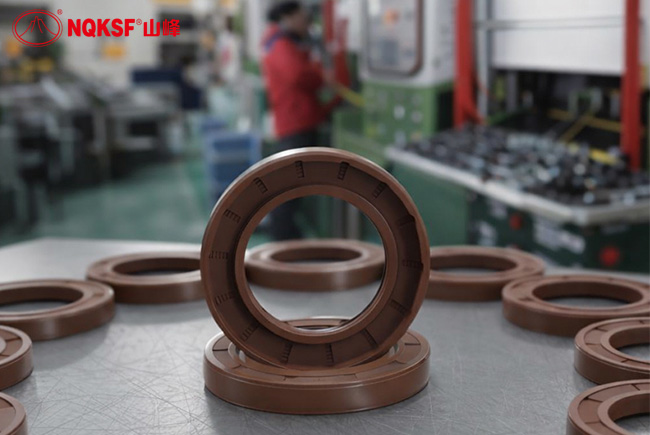
Beyond certificates, production records provide another important part of supplier evaluation. Buyers should understand how incoming materials are identified, how production batches are recorded, and how finished products are inspected. These records help establish accountability when a quality issue needs investigation.
A useful supplier audit does not end when documents are collected. Their validity, scope, and connection to the actual order must all be checked. By combining document verification with an understanding of production management, buyers can make more informed decisions and reduce avoidable supply chain risks.
 Hot News
ShanFeng Special Rubber Products Co., Ltd., operating under brand NQKSF since 1990, is a global leader in the sealing industry.
Copyright © 2026 ShanFeng Special Rubber Products Co., Ltd. All rights reserved. Privacy Policy
 EN