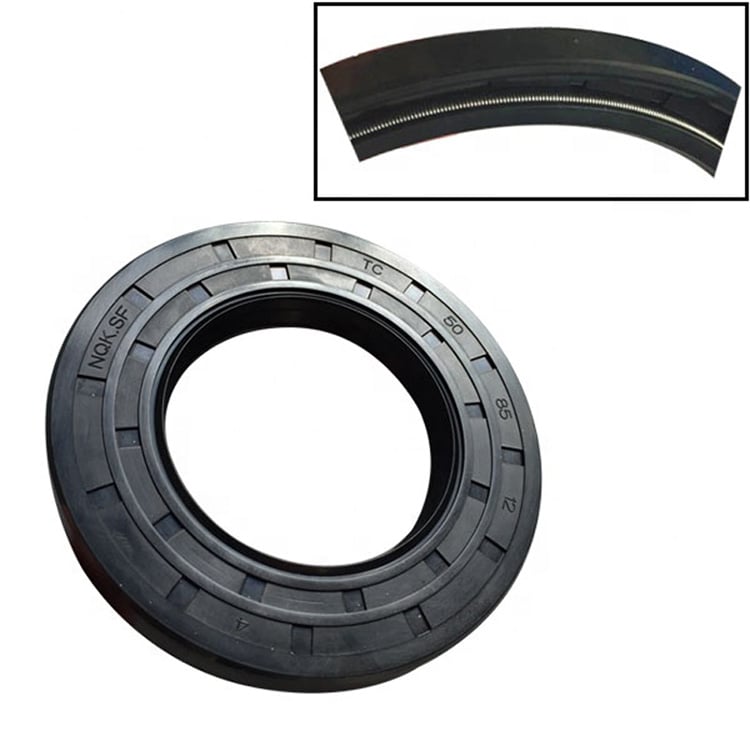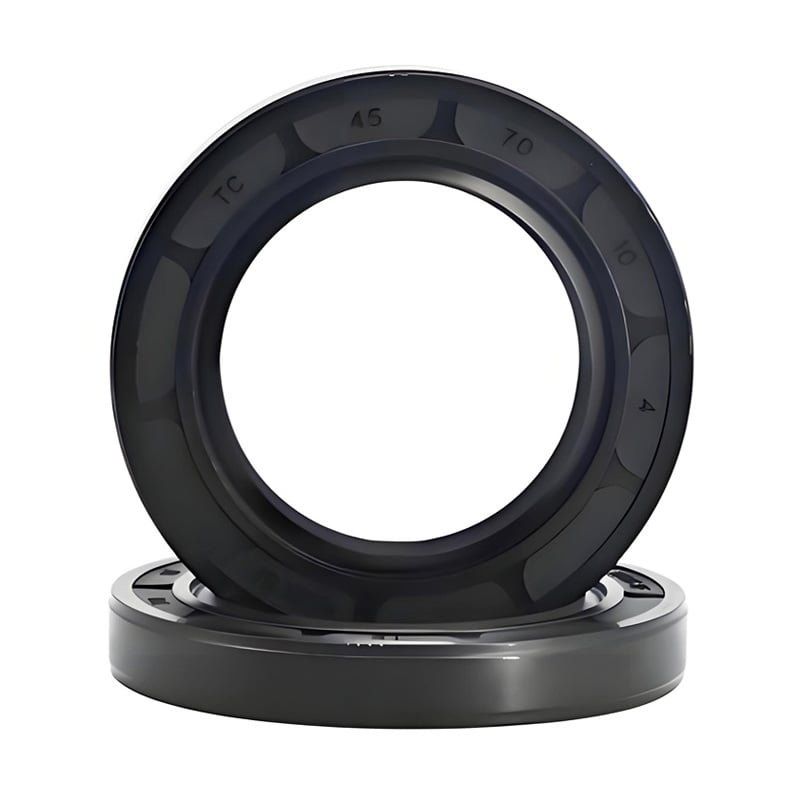

To choose an O-ring manufacturer for multiple applications, buyers should prioritize material selection, dimensional range, production consistency, compound capability, quality control, and technical support. A manufacturer suitable for diverse industrial requirements should be able to adapt the O-ring material and specification to different media and working conditions without losing control over product consistency.
The goal is not simply to find a manufacturer with many O-ring sizes. It is to find one capable of managing different materials, environments, and application requirements.
A wide size range is only the starting point
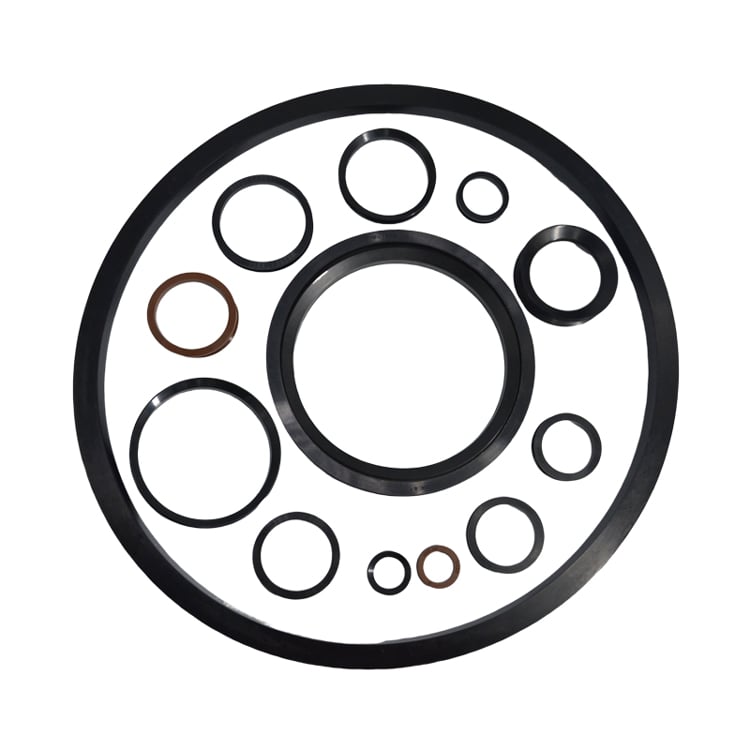
O-rings are manufactured in many standard sizes, including metric and inch-based dimensions.
For equipment manufacturers and distributors, a broad dimensional range can simplify purchasing because different machines may use different standards.
However, size coverage alone does not make a manufacturer suitable for multiple applications.
A supplier may have thousands of dimensions but limited material options or limited control over rubber compounds.
For industrial use, dimensional range and material capability need to be considered together.
Different applications require different compounds
An O-ring used with mineral oil does not necessarily require the same compound as one exposed to hot air, water, fuel, or a specific chemical medium.
NBR is commonly used for many oil and grease applications. FKM is often selected when higher temperature resistance or different chemical compatibility is required. EPDM is frequently associated with hot water, steam, and certain polar fluids, but is generally not the first choice for petroleum-based oils.
These are general material tendencies rather than universal rules. Actual compatibility depends on the specific compound, fluid composition, temperature, concentration, and exposure conditions.
This is why a manufacturer serving multiple industries should have more than one elastomer option.
Ask whether the manufacturer understands application differences
A capable O-ring manufacturer should recognize that the same size does not mean the same application.
Consider a simple example.
An O-ring with a 50 mm nominal size might be used in a static flange, a hydraulic assembly, or another dynamic sealing arrangement. The dimensions may be similar, but the required compression, hardness, clearance, lubrication, and material selection can differ.
A supplier that focuses only on the part number may miss these differences.
A supplier with application knowledge can help determine whether the selected compound and hardness are appropriate for the operating environment.
Manufacturing consistency becomes important when applications multiply
When a buyer purchases O-rings for several types of equipment, consistency becomes more difficult to manage.
Different products may use different compounds, hardness levels, colors, curing conditions, and dimensions.
If production control is weak, variation between batches can create assembly or sealing problems.
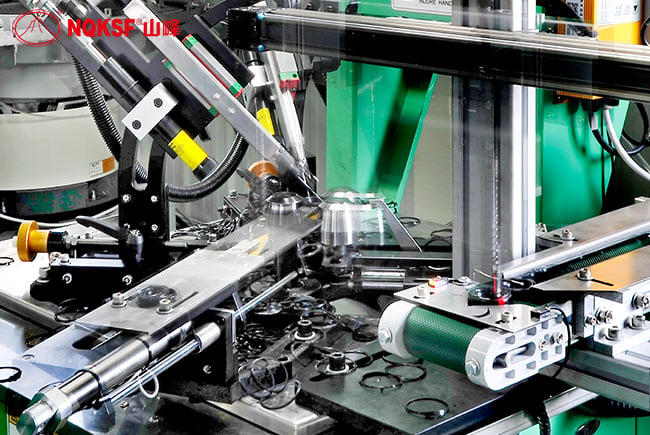
For this reason, buyers should pay attention to how the manufacturer manages compound identification, molding conditions, dimensional inspection, and finished-product inspection.
The exact quality controls may differ by manufacturer, but the principle is straightforward: different specifications require controlled production, not simply different labels.
Consider whether the manufacturer can support standard and special requirements
A multi-application O-ring supplier should ideally be able to handle routine catalog sizes while also discussing less common requirements.
These might include a particular material, hardness, dimensional standard, temperature range, or application environment.
However, customization should not be treated as a reason to ignore engineering limitations.
For example, changing hardness or compound may influence compression behavior, extrusion resistance, low-temperature flexibility, and fluid compatibility.
A technically capable manufacturer should explain these trade-offs rather than treating every request as a simple production change.
Inventory can make multi-application purchasing easier
For distributors and maintenance suppliers, stocked standard O-rings can reduce procurement complexity.
Metric and inch sizes can be kept according to actual demand, while less frequently requested specifications can be produced according to order requirements.
The value of inventory is therefore connected to purchasing patterns.
A manufacturer with organized inventory management can help customers reduce the need to source common sizes from several different suppliers.
Ask for samples before evaluating large orders
When a manufacturer claims to support many applications, samples provide a practical way to verify the claim.
A buyer can compare:
Dimensions
Surface condition
Material identification
Hardness where applicable
Packaging
Documentation
Consistency between samples
For a critical application, the sample should also be evaluated under actual or representative operating conditions whenever practical.
This creates a much stronger basis for supplier selection than catalog information alone.
The right O-ring manufacturer is a technical partner, not just a size supplier
Multiple applications create multiple variables.
A suitable manufacturer should therefore be able to connect size, material, hardness, medium, temperature, pressure, movement, and installation conditions when discussing an O-ring requirement.
For procurement teams, this approach also simplifies supplier management.
Instead of selecting different suppliers based only on individual part numbers, buyers can evaluate whether one manufacturer has the technical and production capability to support a broader range of applications.
That is the more useful meaning of an O-ring manufacturer with “multi-application capability”: not simply a large catalog, but the ability to select, produce, control, and supply different O-ring specifications consistently.
 Hot News
ShanFeng Special Rubber Products Co., Ltd., operating under brand NQKSF since 1990, is a global leader in the sealing industry.
Copyright © 2026 ShanFeng Special Rubber Products Co., Ltd. All rights reserved. Privacy Policy
 EN
EN