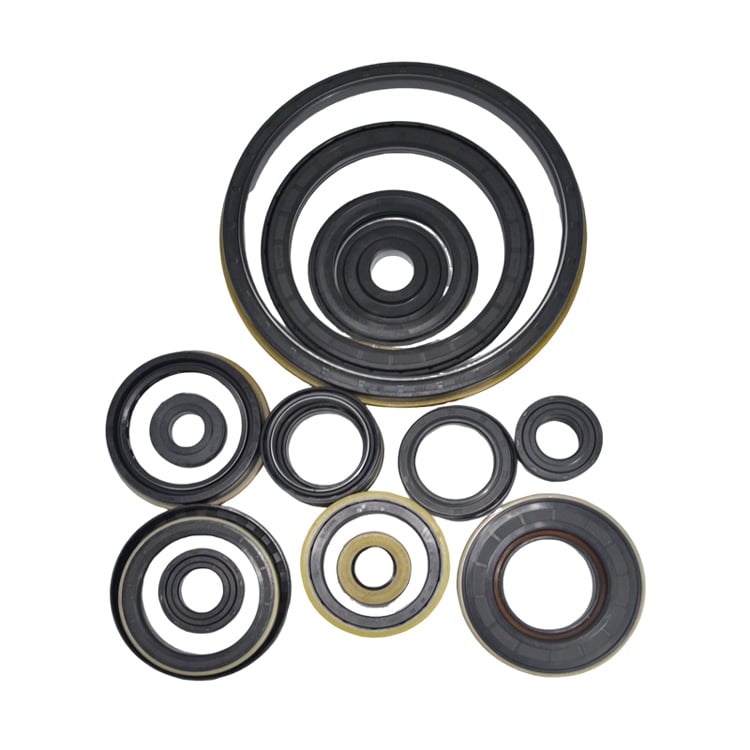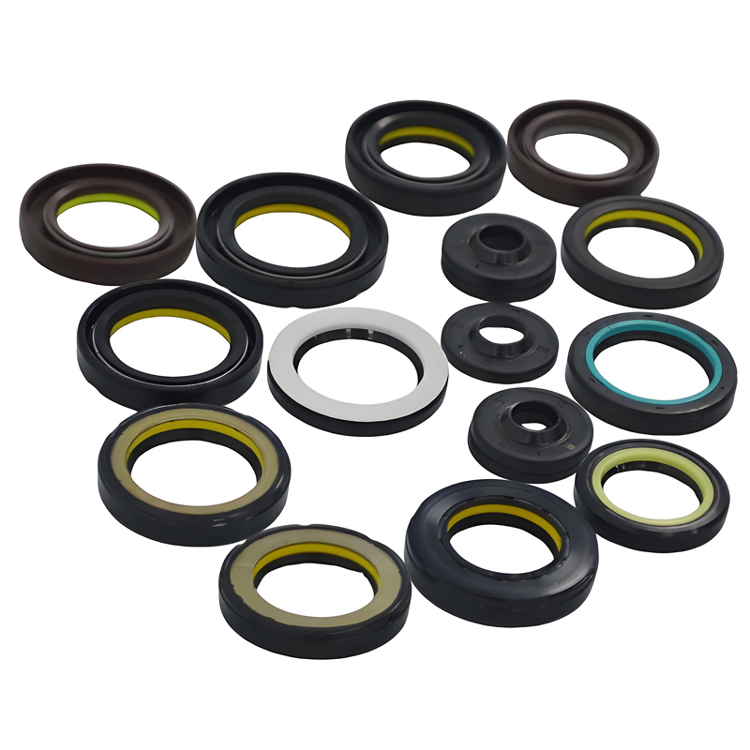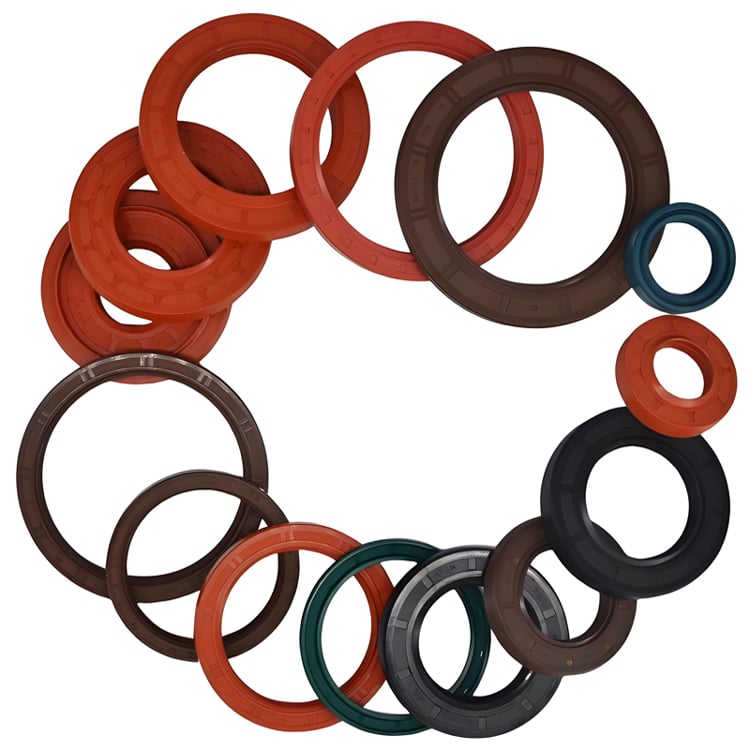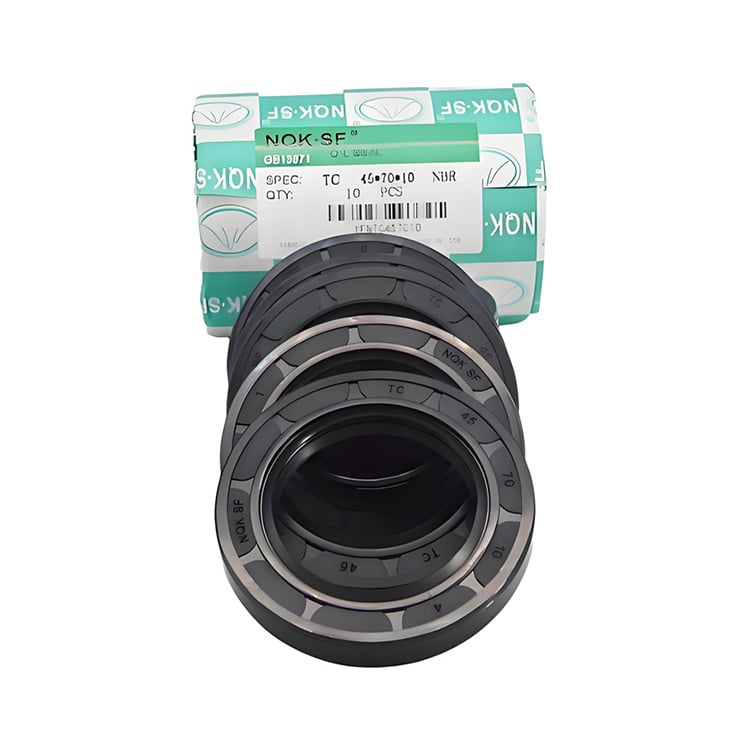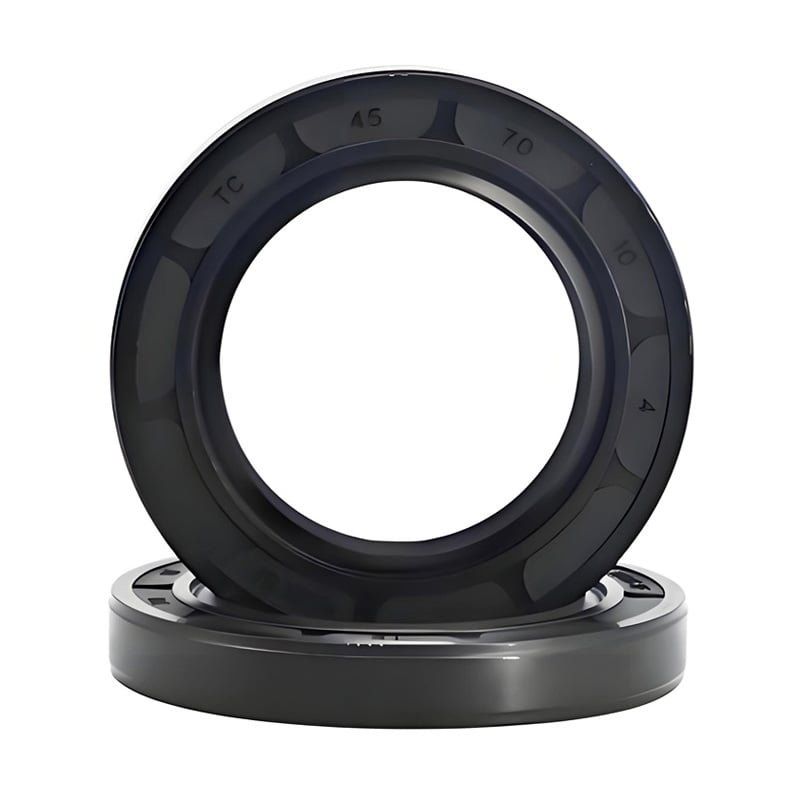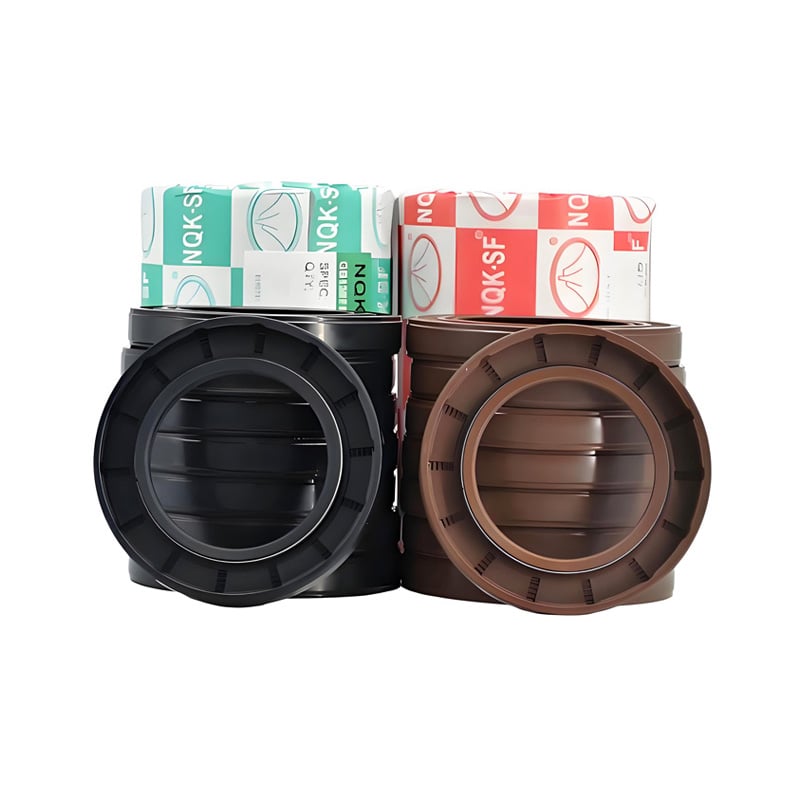

Many seal manufacturers keep a substantial inventory of TC oil seals because TC is a practical general-purpose configuration that appears across a wide range of rotating-shaft applications. Its combination of an oil-sealing lip, an outer dust lip, metal reinforcement, and spring-assisted lip contact makes it suitable for many everyday sealing requirements.
But inventory decisions are not based on product popularity alone. There is a business reason behind the stock.
One profile can serve many different machines
A manufacturer may receive orders from a motor distributor in the morning, a gearbox repair company in the afternoon, and an agricultural machinery customer later in the day.
Their machines are different, but many of the sealing requirements are similar: a rotating shaft, lubricating oil or grease, and some level of exposure to dust or outside contamination.
The TC configuration fits this type of requirement well because its two-lip arrangement combines lubricant retention with additional contamination protection.
As a result, manufacturers can use the same basic seal structure across many equipment categories while changing the dimensions and, when necessary, the rubber compound.
Standard sizes create a practical inventory advantage
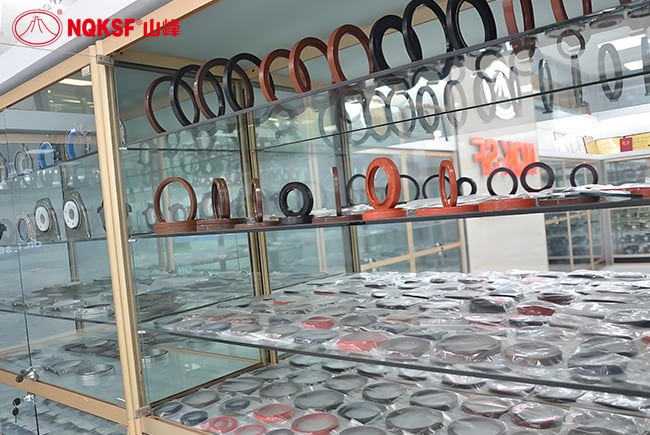
TC oil seals are available across a broad range of standard dimensional combinations.
Published catalogs, for example, list TC sizes by shaft diameter, housing diameter, and seal width, with many common metric sizes available in standard NBR constructions.
For a seal manufacturer, this creates an important stocking opportunity.
Instead of producing every order from the beginning, commonly requested sizes can be prepared in advance. When a customer needs a standard size, the supplier can respond from existing stock rather than waiting for a complete production cycle.
This is particularly useful in the aftermarket, where customers may need a relatively small quantity but expect quick shipment.
TC is frequently used where contamination cannot be ignored
A single sealing lip may be sufficient in a relatively clean application. Machinery operating outdoors or around dust, dirt, water, or particles presents a different problem.
The secondary lip in a TC seal provides an additional barrier on the outside of the main sealing area. It does not make the equipment completely contamination-proof, but it gives the sealing system another layer of protection.
This helps explain why TC profiles are commonly seen in reducers, motors, pumps, hydraulic equipment, automotive-related applications, and agricultural machinery.
Stocking TC does not mean every application should use TC
This point is easy to overlook.
A large inventory of TC oil seals does not mean TC is automatically the correct choice for every rotating shaft.
For a clean environment where friction reduction is a major concern, another profile may be more appropriate. High-speed, high-temperature, high-pressure, chemically aggressive, or unusual shaft movements can also require a different seal design or material.
Specialized rotary shaft seals are available in different geometries and materials precisely because operating conditions vary.
So manufacturers usually stock TC because it covers a broad portion of ordinary demand—not because it replaces every other oil seal profile.
Inventory is also about customer service
From a customer's perspective, the value of stocked TC seals is straightforward: less waiting.
A repair company replacing a gearbox seal does not necessarily want to wait several weeks for a small batch. A distributor may also need several dimensions at the same time.
Keeping frequently requested TC sizes in inventory allows a seal supplier to support these short-cycle requirements while reserving production capacity for special dimensions, materials, or customized designs.
That is why TC oil seals are often treated as a core inventory product. Their wide application range, standard dimensional availability, and relatively straightforward construction make them practical both technically and commercially.
In the sealing industry, inventory is rarely about storing “a popular product” for its own sake. It is about keeping the configurations that are most likely to solve real customer problems available when those problems occur.
 Hot News
ShanFeng Special Rubber Products Co., Ltd., operating under brand NQKSF since 1990, is a global leader in the sealing industry.
Copyright © 2026 ShanFeng Special Rubber Products Co., Ltd. All rights reserved. Privacy Policy
 EN
EN