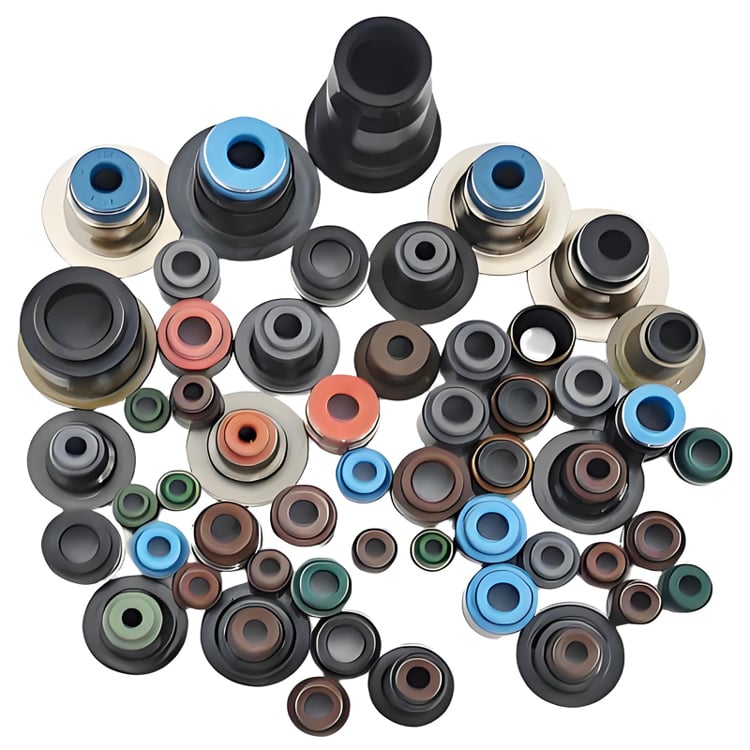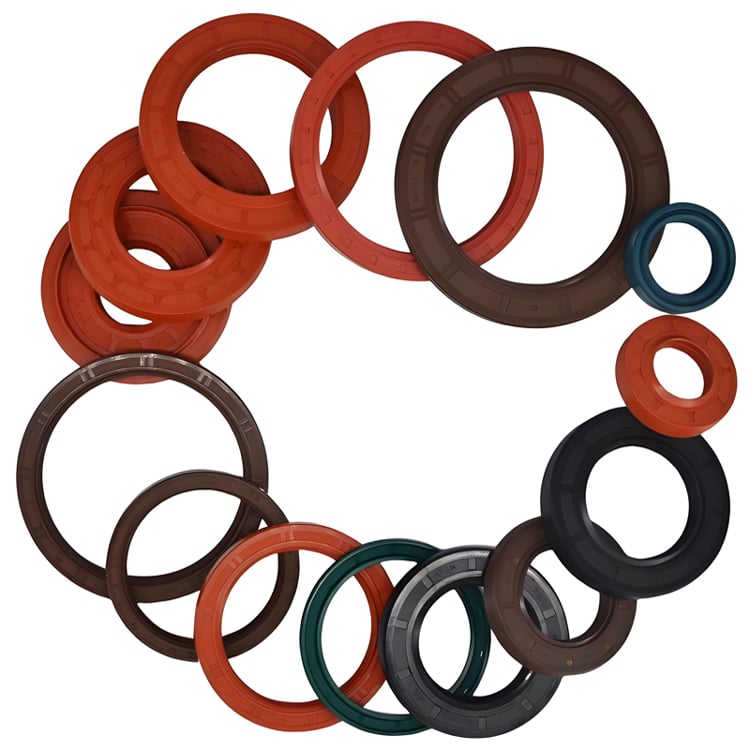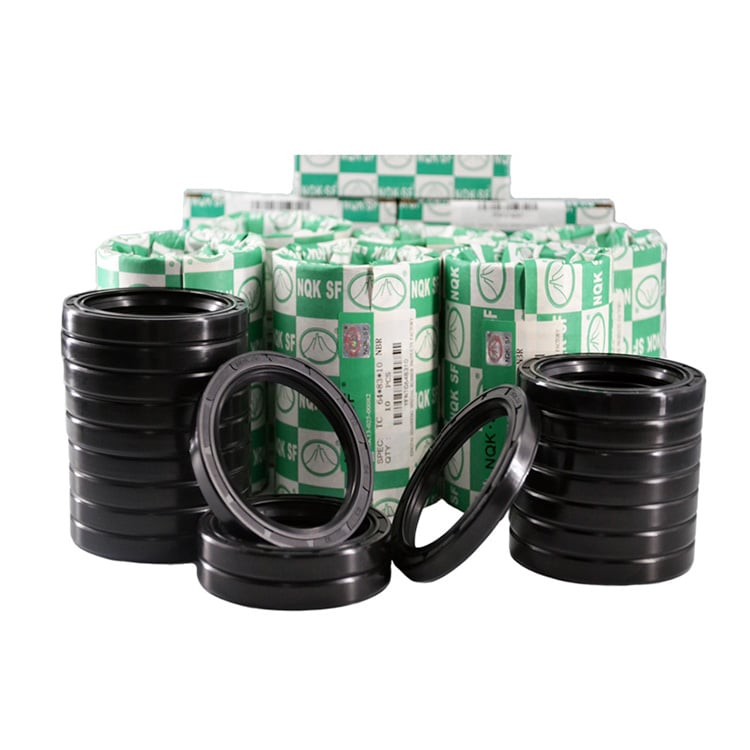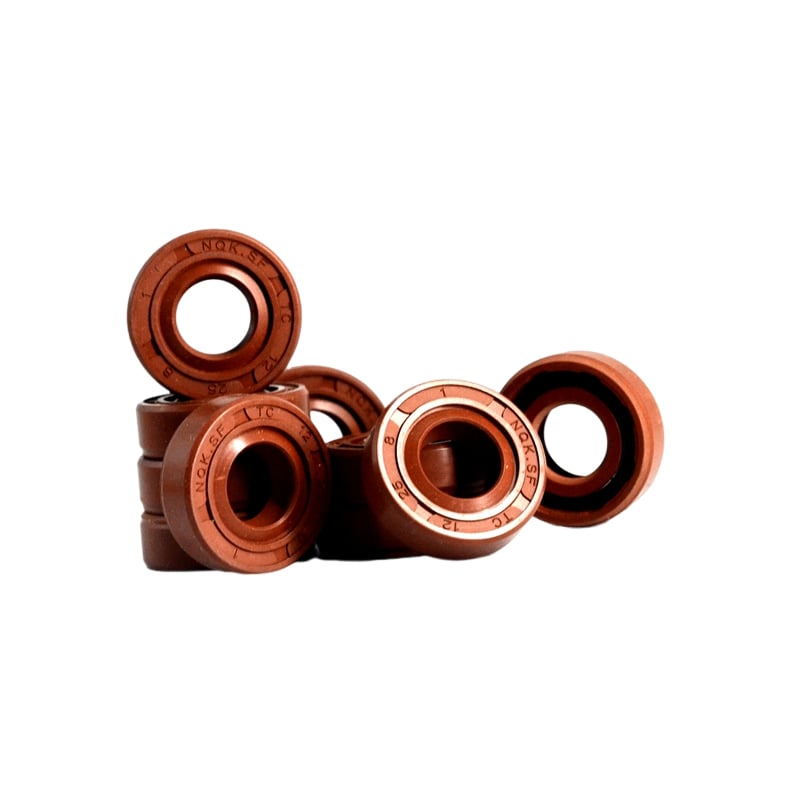

A good oil seal is not simply one that fits the shaft and stops oil from leaking. It should maintain reliable contact with the shaft, keep lubricant inside, limit the entry of dust or moisture, and continue working under the actual speed, temperature, media, and mechanical conditions of the equipment. In other words, a qualified oil seal is one that remains stable as part of the whole sealing system rather than performing well only under ideal conditions.
The sealing lip is where performance begins
The sealing lip is the working part that directly interacts with the rotating shaft. Its job is more complicated than creating a tight contact.
During operation, the lip needs to maintain enough radial force to control lubricant leakage while keeping friction and heat generation within a reasonable range. If the contact force is too low, leakage may develop. If it is too high, friction increases and the lip may wear faster.
This is why lip geometry matters. The shape, flexibility, contact width, and working angle all influence how an oil seal behaves once the shaft starts rotating.
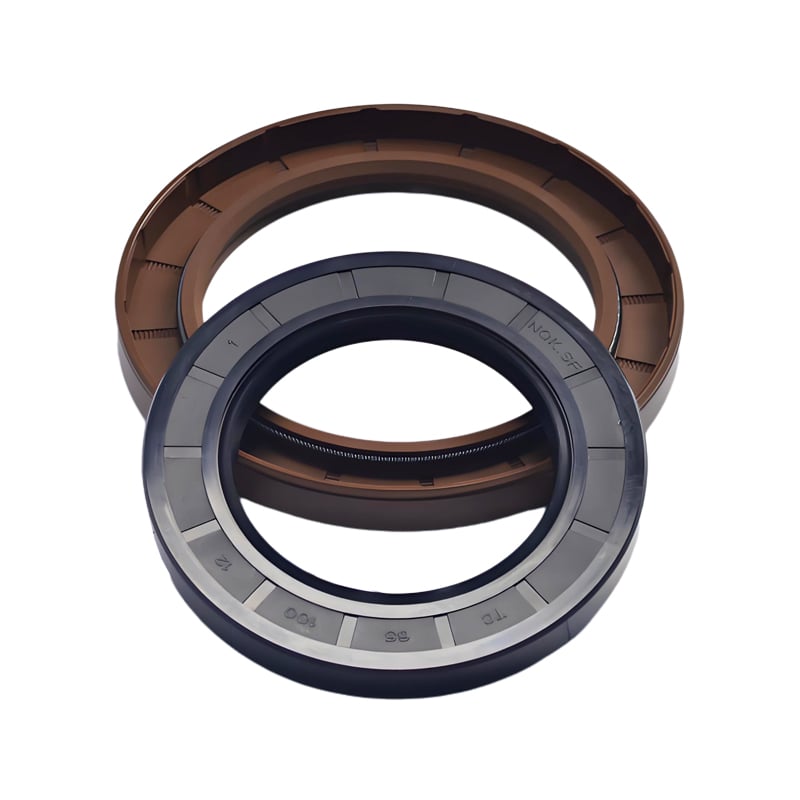
For many conventional radial oil seals, a garter spring is used to help maintain lip contact pressure around the shaft. This type of construction is commonly found in standard rotary shaft seals.
Material should match the working medium
There is no single rubber material that is appropriate for every oil seal application.
NBR is widely used in general oil and grease sealing because it offers a practical balance between oil resistance, mechanical properties, flexibility, and cost. FKM becomes more appropriate when the seal must cope with higher temperatures or more demanding chemical and fluid conditions.
The important point is that material selection should be connected to the actual operating environment. Choosing a seal only by its outside appearance or nominal size can lead to premature failure even when the dimensions are correct.
A good oil seal also needs mechanical stability
An oil seal works between a shaft and a housing, so the surrounding components influence its service life.
The shaft surface, shaft runout, eccentricity, installation condition, housing accuracy, and surface finish can all affect the sealing lip. A new seal cannot compensate for a badly worn shaft or an unsuitable installation surface.
For example, published TC seal specifications commonly recommend controlled shaft surface roughness and sufficient shaft hardness because poor shaft conditions can accelerate lip wear.
This explains why two identical oil seals can produce different results on two different machines.
Contamination protection is part of sealing performance
In practical machinery, the seal often has to deal with more than oil.
Dust, mud, water, metal particles, and other contaminants may approach the sealing area from the outside. A secondary dust lip can therefore be useful in environments where contamination is a concern. In a conventional TC profile, the main lip handles lubricant retention while the additional lip helps reduce contaminant entry.
That extra protection can be particularly useful around gearboxes, motors, agricultural machinery, pumps, and other equipment exposed to external contamination.
Consistent manufacturing matters as much as the design
Even a well-designed oil seal will not perform consistently if its dimensions, rubber properties, spring position, or metal case are poorly controlled.
For manufacturers and industrial buyers, quality therefore involves more than checking whether the seal looks acceptable. Dimensional consistency, material stability, lip geometry, metal case forming, and production inspection all influence whether a batch performs consistently in real equipment.
A qualified oil seal should therefore be viewed as a combination of correct design, suitable material, controlled manufacturing, and compatibility with the shaft and housing.
That is the real difference between an oil seal that merely fits and one that is suitable for continuous machine operation.
 Hot News
ShanFeng Special Rubber Products Co., Ltd., operating under brand NQKSF since 1990, is a global leader in the sealing industry.
Copyright © 2026 ShanFeng Special Rubber Products Co., Ltd. All rights reserved. Privacy Policy
 EN
EN