
Automotive oil seals operate in some of the most demanding sealing environments found in everyday machinery. High rotational speeds, elevated temperatures, and continuous exposure to lubricants place unique demands on seal performance.
For this reason, automotive oil seals are often designed to meet requirements that exceed those of many standard industrial applications.
Automotive Components Operate Under Constant Stress
In vehicles, oil seals are commonly installed in crankshafts, camshafts, wheel hubs, transmissions, and differential assemblies.
These locations are exposed to continuous rotation and changing temperatures throughout vehicle operation.
Unlike equipment that runs intermittently, automotive systems often experience frequent starts, stops, acceleration, and long operating hours.
The seal must maintain stable contact with the shaft during all of these conditions.
High Temperature Is a Major Challenge
Heat is one of the primary factors affecting seal life.
Engine compartments and transmission systems can generate temperatures significantly higher than those found in general industrial equipment. Over time, excessive heat accelerates rubber aging and can reduce seal flexibility.
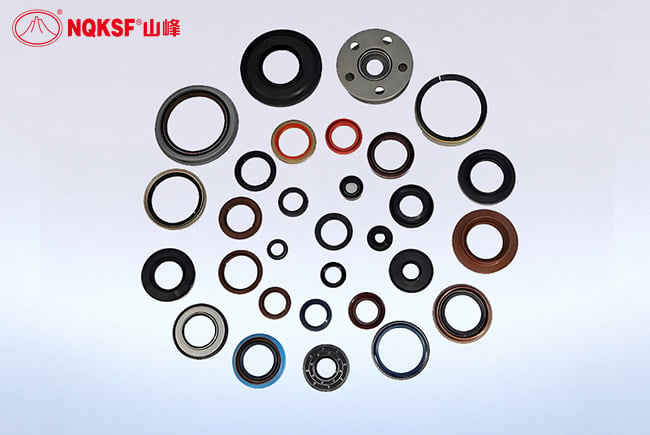
If the material hardens or loses elasticity, the sealing lip may no longer maintain proper contact with the shaft surface, increasing the risk of leakage.
Selecting a material with suitable thermal stability is therefore critical for automotive applications.
Lubricant Compatibility Cannot Be Ignored
Automotive oil seals frequently come into contact with engine oils, transmission fluids, and gear oils.
These lubricants contain various additives designed to improve performance and extend equipment life. However, not every sealing material reacts to these additives in the same way.
Poor compatibility may result in swelling, softening, shrinkage, or loss of mechanical properties.
Over time, such changes can compromise sealing effectiveness even when installation and operating conditions appear normal.
High Shaft Speed Increases Sealing Demands
The faster a shaft rotates, the greater the challenge for the sealing lip.
At high speeds, friction generates additional heat and places greater stress on the contact area between the shaft and the seal.
To handle these conditions, automotive oil seals often utilize carefully optimized lip geometries and spring loading systems to maintain stable sealing performance while controlling wear.
Small design differences can have a significant impact on long-term reliability.
Why Standard Industrial Seals May Not Be Suitable
A standard industrial oil seal may fit the same housing and shaft dimensions as an automotive seal. However, matching dimensions alone do not guarantee equivalent performance.
Automotive environments typically require greater resistance to heat, lubricant exposure, speed, and long service intervals.
Choosing a seal specifically designed for automotive operating conditions helps reduce leakage risks and supports consistent vehicle performance over time.
 Hot News
ShanFeng Special Rubber Products Co., Ltd., operating under brand NQKSF since 1990, is a global leader in the sealing industry.
Copyright © 2026 ShanFeng Special Rubber Products Co., Ltd. All rights reserved. Privacy Policy
 EN