
When a seal fails unexpectedly, attention is often directed toward pressure, temperature, or installation quality. However, another factor frequently contributes to early failure: incompatibility between the sealing material and the substances it contacts.
The interaction between elastomers, lubricants, and operating media can significantly influence seal durability and reliability.
Not All Fluids Affect Rubber the Same Way
Every elastomer responds differently when exposed to various chemicals and lubricants.
Some fluids may have little impact on a seal material, while others can trigger physical changes that gradually reduce performance.
These changes are often invisible during installation but become more noticeable after extended operation.
Common symptoms include:
Excessive swelling
Hardening
Softening
Surface cracking
Loss of elasticity
Once these changes occur, maintaining an effective seal becomes increasingly difficult.
Installation Grease Matters More Than Many Users Realize
Lubricating a seal during installation is generally considered good practice. It reduces assembly friction and helps prevent damage during startup.
However, the wrong grease can create compatibility problems before the equipment even begins normal operation.
If the grease reacts negatively with the elastomer, the sealing material may absorb components of the lubricant and experience dimensional changes.
Selecting a grease that is chemically compatible with both the seal material and the operating medium helps avoid unnecessary risks.
Different Media Require Different Material Choices
Seal material selection should always consider the process fluid.
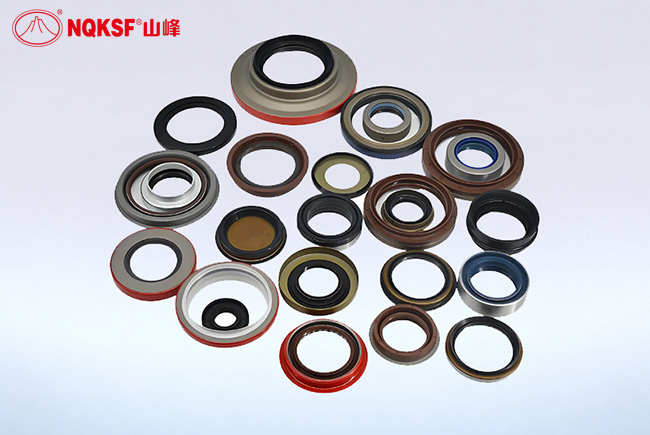
For example:
Mineral oils are commonly paired with NBR materials.
Higher-temperature synthetic lubricants often require FKM compounds.
Water-based environments may require specially formulated elastomers.
Chemical media may demand materials with enhanced resistance to acids or alkaline substances.
No single elastomer performs equally well in every environment.
Understanding both the fluid composition and operating conditions is essential before finalizing material selection.
Early Seal Failure Often Starts with Chemical Interaction
A seal may appear mechanically sound while chemical degradation is already taking place.
As the material properties change, contact pressure, flexibility, and wear resistance may gradually decline. Leakage then becomes the visible symptom of a process that began much earlier.
Because these failures often develop slowly, they are sometimes mistaken for normal wear.
Preventing Compatibility Problems
Choosing the correct seal material is only part of the solution.
The installation lubricant, process fluid, temperature range, and maintenance practices should all be evaluated together. A properly matched combination reduces the likelihood of material degradation and helps extend the service life of the sealing system.
In many cases, a seal's long-term performance depends not only on its design, but also on how well it coexists with the environment around it.
 Hot News
ShanFeng Special Rubber Products Co., Ltd., operating under brand NQKSF since 1990, is a global leader in the sealing industry.
Copyright © 2026 ShanFeng Special Rubber Products Co., Ltd. All rights reserved. Privacy Policy
 EN