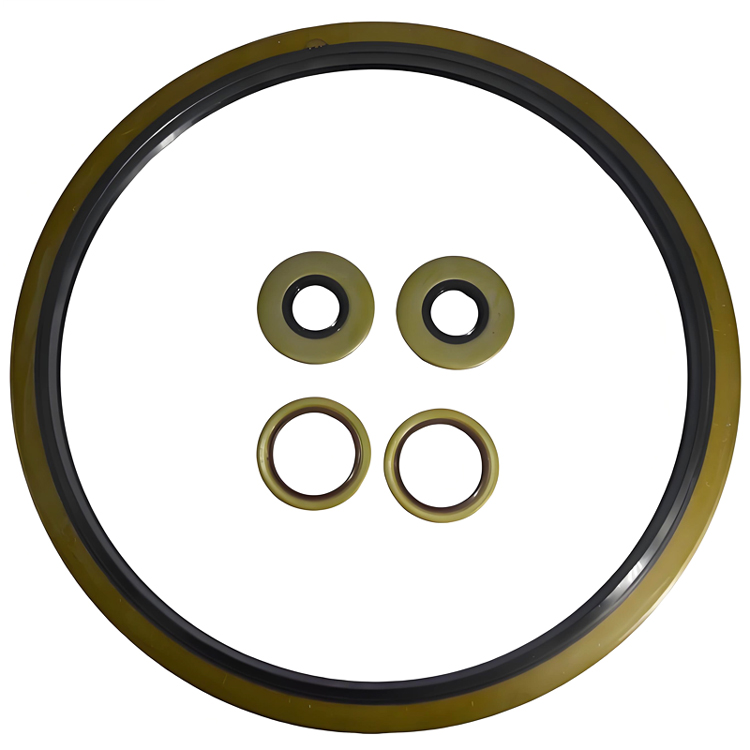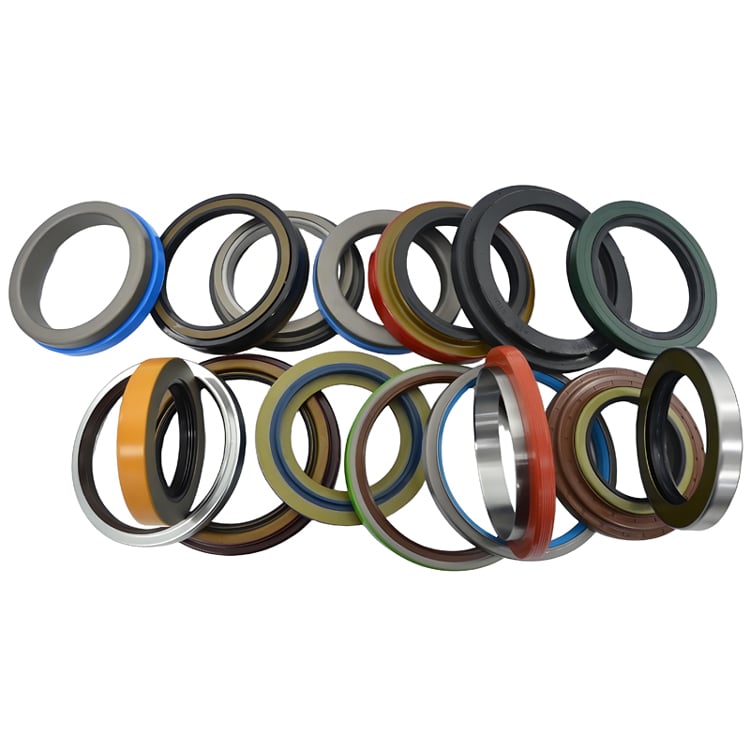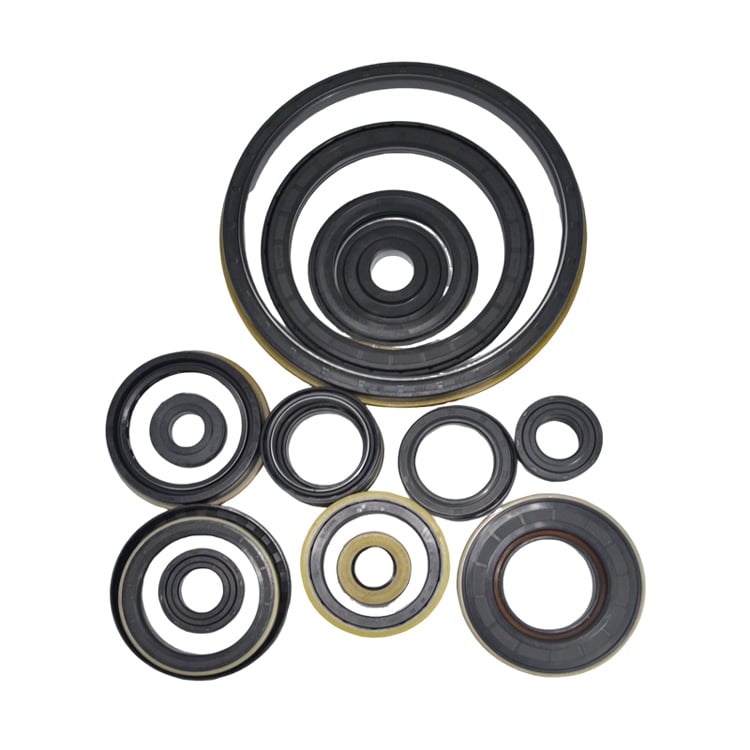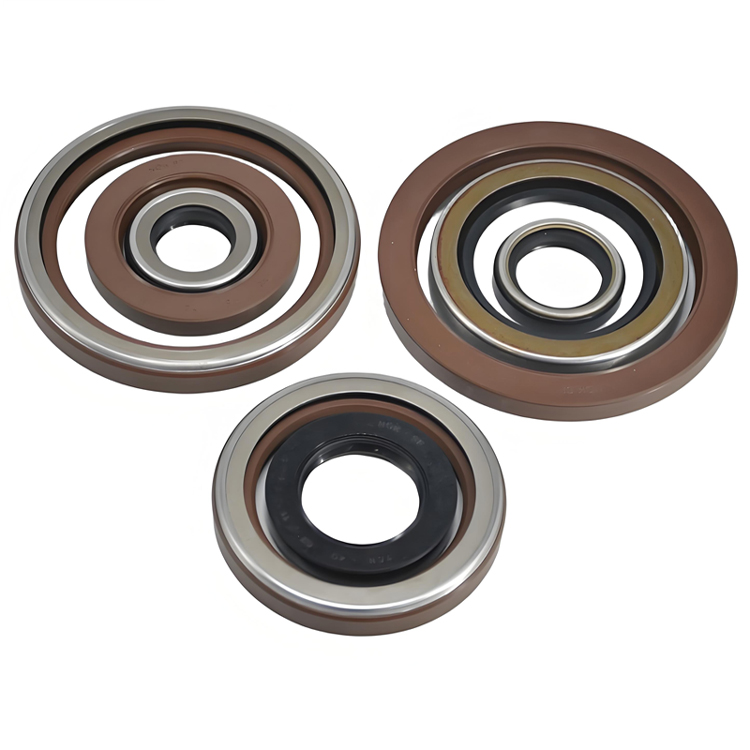

Skeleton oil seals are mainly used wherever a rotating or reciprocating shaft needs to be sealed against oil, grease or other lubricants while the shaft passes through a housing. Common applications include motors, gearboxes, pumps, agricultural machinery, automotive systems, construction equipment and general industrial machinery. The actual application range depends on the seal profile, material and operating conditions rather than the term “skeleton oil seal” alone.
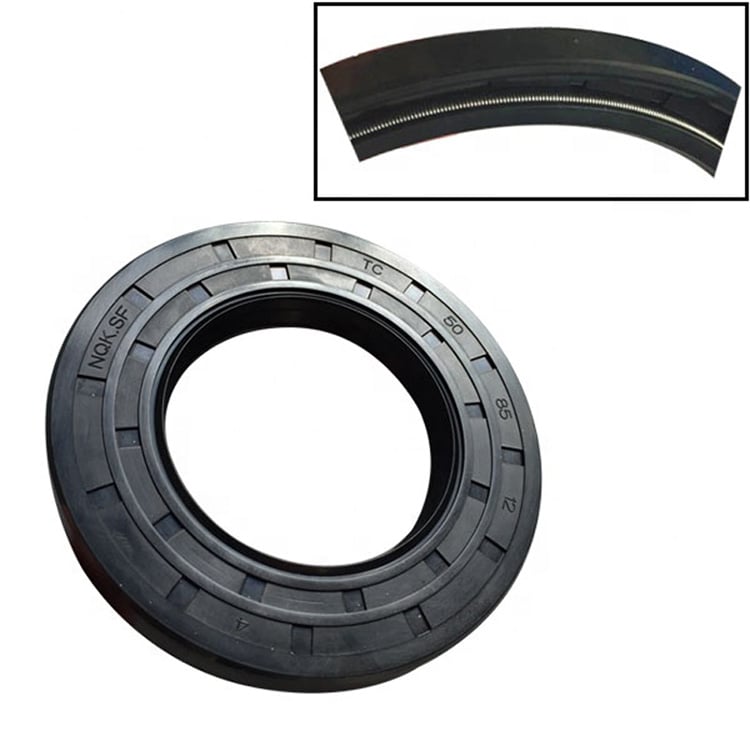
The reason these seals appear in so many types of equipment is related to their basic construction. A typical skeleton oil seal combines an elastomeric sealing lip with a reinforcing metal case. Many common designs also include a garter spring and, depending on the profile, an additional dust lip. This gives the seal enough structural support to be installed into a housing while allowing the flexible lip to follow the shaft during rotation.
Consider a gearbox first. The gearbox needs to retain its lubricant around rotating shafts, bearings and gears. If oil escapes through the shaft opening, lubrication can gradually become insufficient. At the same time, dust and particles from outside can enter through the same area. A double-lip skeleton oil seal can therefore serve two related functions: retaining lubricant and limiting contamination around the shaft entry point.
Motors are another common setting. Electric motors often use grease or oil around bearings and rotating assemblies, while the shaft extends through the housing. A radial oil seal can be used where the construction of the motor requires separation between the internal lubricant and the surrounding environment.
Agricultural and construction machinery introduce a different challenge. Equipment used outdoors can encounter soil, dust, water splash and other contaminants. In these situations, the choice of lip arrangement becomes important. A seal with a protective or dust lip may be more appropriate when contamination around the shaft is expected. Shanfeng's product range, for example, includes industrial oil seals as well as agricultural and construction machinery sealing products, reflecting the different sealing requirements found across these equipment categories.
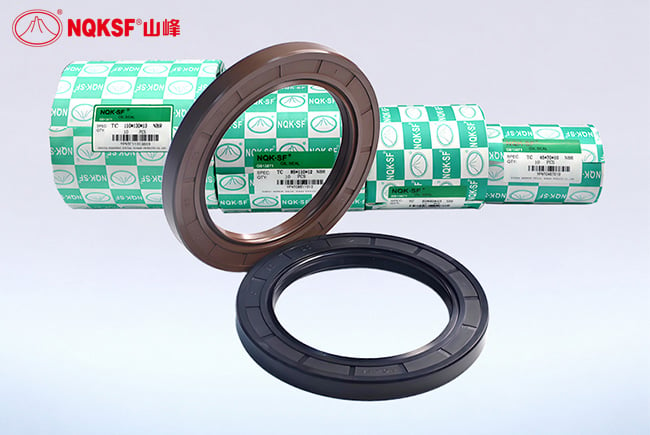
Automotive applications are another major field. Skeleton oil seals can be found in areas such as engines, transmissions, axles and other rotating assemblies. However, the specific seal cannot be selected simply because the equipment is an automobile. Engine oil, transmission fluid, shaft speed, temperature and available installation space can all differ. The sealing material and profile therefore have to match the particular location.
There is also an important boundary to the application range. A standard radial skeleton oil seal should not automatically be considered suitable for every pressure, speed or temperature condition. Conventional radial shaft seals are generally used in relatively low-pressure applications. If the equipment has higher pressure, extreme speed, aggressive chemicals or unusual shaft movement, a different seal construction may be necessary.
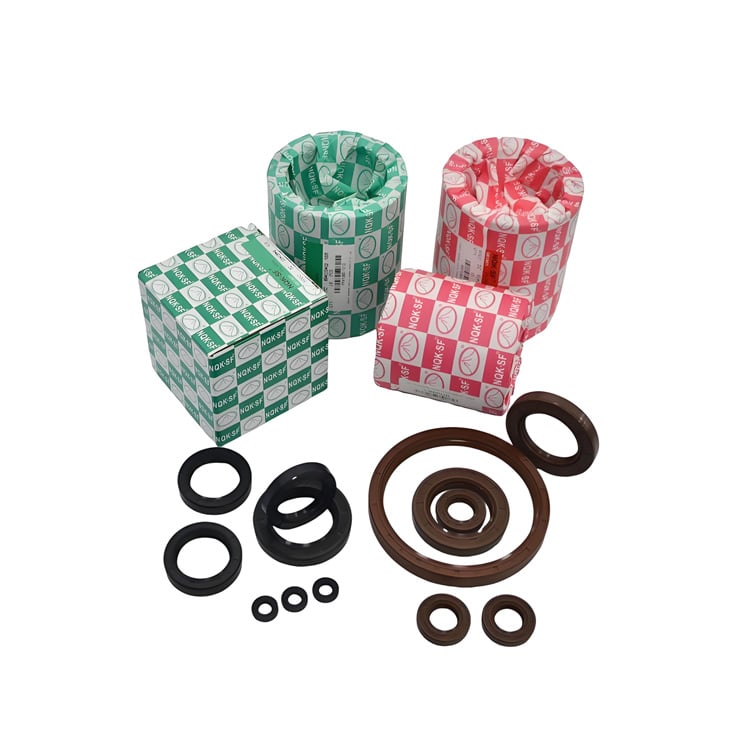
Material selection further expands or limits the practical range. NBR is commonly used with compatible mineral oils and lubricants under general operating conditions. FKM can be considered when higher temperature or more demanding chemical exposure is involved. Other elastomers and sealing materials may be selected for water, special fluids, high-temperature conditions or other specific requirements.
So the application range of a skeleton oil seal should be understood from the machine's sealing point rather than from the machine name alone. The shaft movement, lubricant, temperature, speed, contamination, pressure and available installation dimensions together determine whether a particular skeleton seal is appropriate.
 Hot News
ShanFeng Special Rubber Products Co., Ltd., operating under brand NQKSF since 1990, is a global leader in the sealing industry.
Copyright © 2026 ShanFeng Special Rubber Products Co., Ltd. All rights reserved. Privacy Policy
 EN
EN