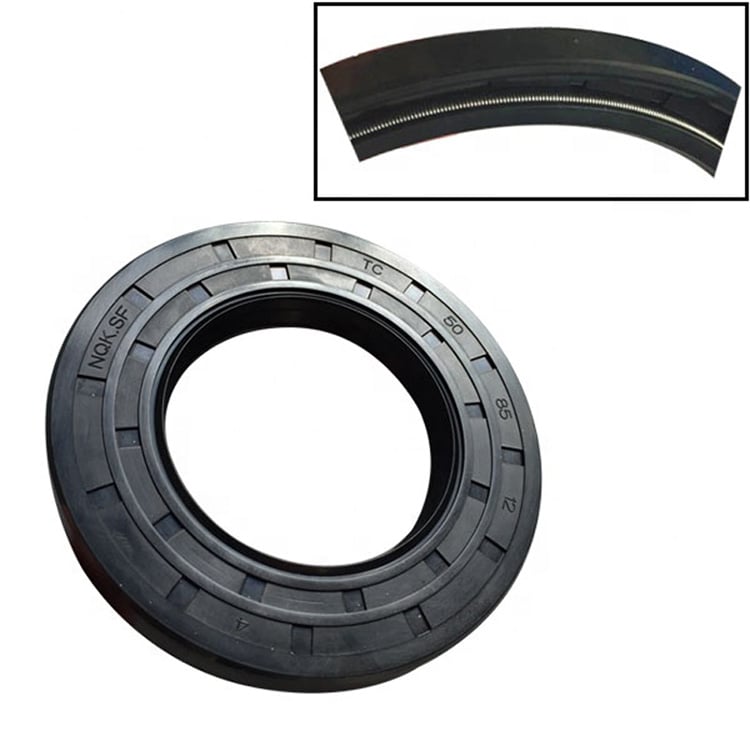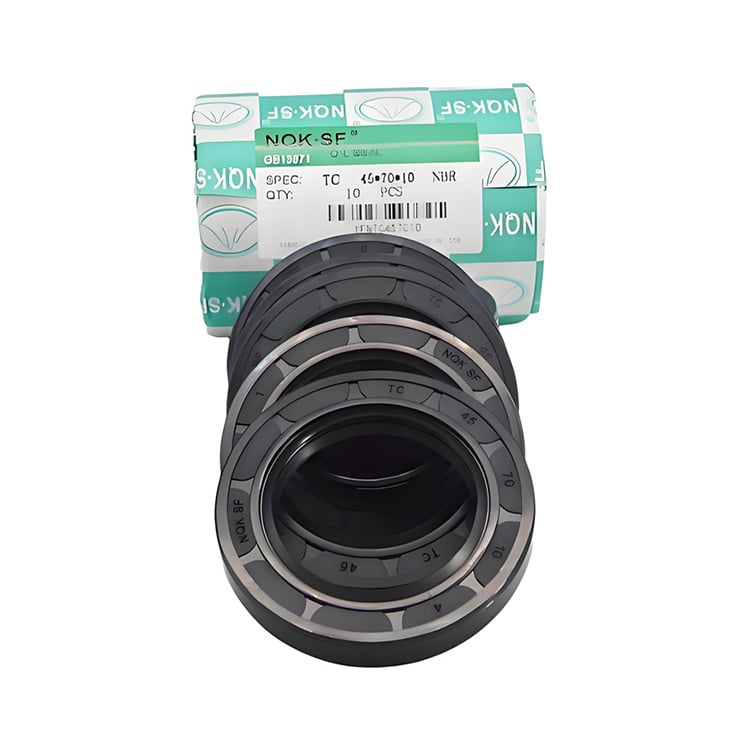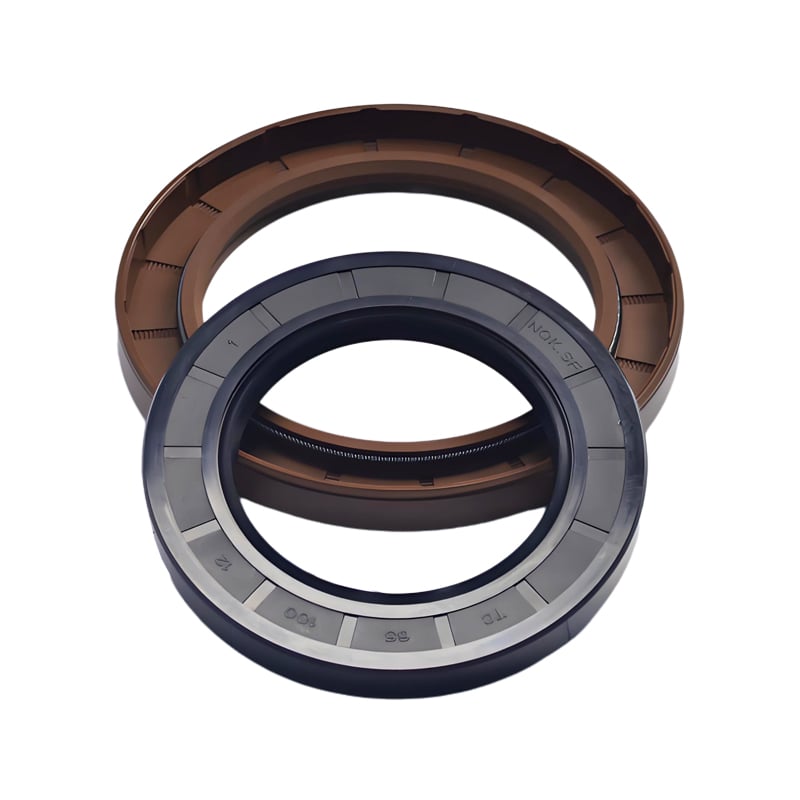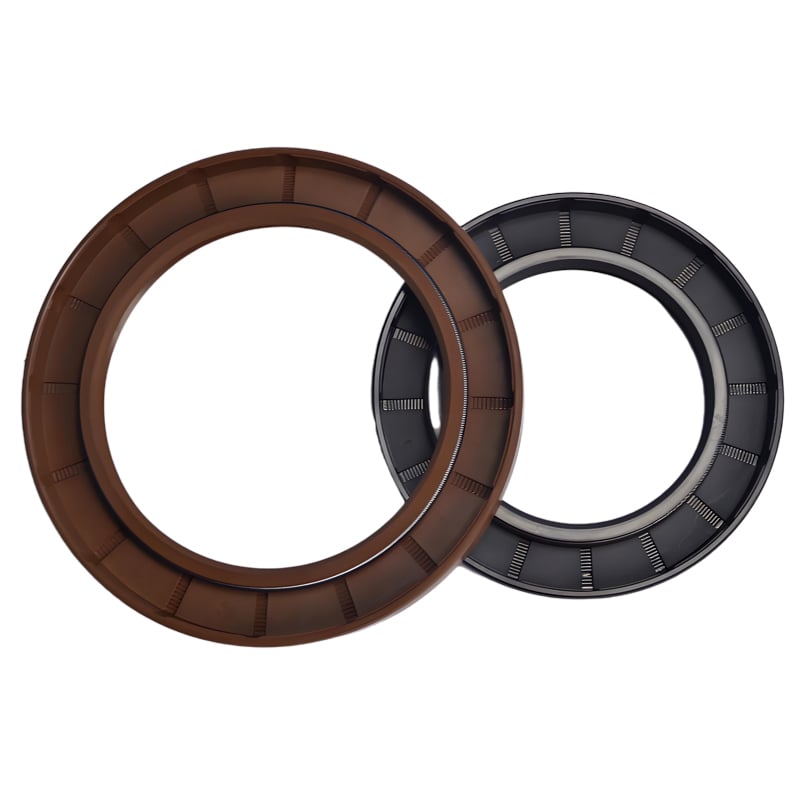

In low-temperature applications such as robot shaft systems, skeleton oil seals (radial shaft seal) frequently experience oil leakage, increased start–stop wear, and unstable sealing performance. Field experience shows that these failures are often not caused by improper installation, but by the loss of effective lip interference compensation at low temperatures.
This article analyzes how low temperature affects lip interference and outlines practical design strategies to improve sealing reliability under cold operating conditions.
Influence of Low Temperature on Lip Interference
Skeleton oil seals rely on stable contact pressure between the sealing lip and the shaft surface to prevent leakage. Under low-temperature conditions, several coupled effects lead to systematic degradation of sealing performance:
Rubber stiffening
As temperature decreases, the elastic modulus of elastomers increases and material compliance decreases, reducing the lip’s ability to conform to the shaft surface.
Thermal expansion mismatch
Elastomers, metal cases, and shafts exhibit different thermal contraction rates. This mismatch alters the actual interference and contact pressure at low temperatures.
Lubrication deterioration
Increased lubricant viscosity delays oil film formation during start-up, pushing the sealing interface into boundary or mixed friction regimes and accelerating wear.
The core issue is therefore not simply insufficient interference, but the inability of the lip to continuously generate effective contact pressure at low temperature.
Rational Determination of Interference
Lip interference must be optimized based on operating conditions (pressure, speed), material properties, and shaft diameter.
Typical recommended values range from 0.35–0.55 mm, while certain high-load applications may require up to 0.8 mm.
However, blindly increasing interference is not recommended. Excessive interference can raise friction torque, accelerate wear, and increase heat generation. Final values should always be verified through simulation and validation testing.
Material Selection: Focus on Low-Temperature Resilience
Maintaining sealing force at low temperature depends primarily on the material’s elastic recovery and resilience, rather than nominal “cold resistance” alone:
FVMQ
Suitable for extremely low temperatures, offering good flexibility combined with oil resistance. Often used in collaborative robots and systems requiring high compliance.
Low-temperature formulated FKM
Balances oil resistance, aging resistance, and improved low-temperature rebound, suitable for moderate to low-temperature sealing systems.
HNBR
Provides a compromise between low-temperature elasticity and mechanical strength, commonly applied in outdoor equipment and engineering machinery.
The key criterion is whether the material can maintain effective elastic recovery at low temperature, not merely survive exposure to cold.
Spring System: A Critical Compensation Mechanism
As rubber stiffness increases at low temperature, the spring becomes the primary source of contact pressure compensation:
Adequate effective stroke and stable spring force at low temperature
Coordinated load sharing between the spring and lip geometry
For extremely cold environments, lip designs with radial garter springs are strongly recommended
A properly designed spring system significantly improves sealing stability when elastomer compliance is reduced.
Structural Optimization for Temperature Adaptability
Rather than increasing interference, structural optimization is often more effective in enhancing low-temperature performance:
Reduced lip cross-section to improve flexibility
Extended elastic arm length to enhance follow-up capability
Optimized contact angle to achieve more uniform pressure distribution and reduce edge wear
The design objective is to enable the sealing lip to respond dynamically, rather than passively endure performance loss.
Shaft Surface Condition: A Decisive Factor at Low Temperature
Because oil film formation is more difficult at low temperature, shaft surface quality becomes especially critical:
Surface roughness controlled within Ra 0.2–0.4 μm to balance oil retention and conformity
Introduction of micro-textures (e.g., cross-hatched patterns) to improve start-up lubrication
Avoidance of surface defects that can trigger early lip wear
Proper shaft preparation is an essential part of low-temperature sealing reliability.
System-Level Coordination: Thermal Matching and Tolerance Control
Stable low-temperature sealing requires a system-level approach:
Coordinated thermal contraction among components
Consideration of assembly tolerances under low-temperature conditions
Selection of lubricants with suitable low-temperature flow and adhesion properties
Only through thermal–mechanical system coordination can the sealing lip maintain consistent contact pressure throughout operation.
The key to successful low-temperature sealing is not excessive interference, but the creation of a sealing system with intrinsic temperature adaptability.
By integrating optimized materials, lip geometry, spring systems, shaft surface design, and system-level thermal matching, reliable sealing performance and extended service life can be achieved even under demanding low-temperature conditions.
 Hot News
ShanFeng Special Rubber Products Co., Ltd., operating under brand NQKSF since 1990, is a global leader in the sealing industry.
Copyright © 2026 ShanFeng Special Rubber Products Co., Ltd. All rights reserved. Privacy Policy
 EN
EN