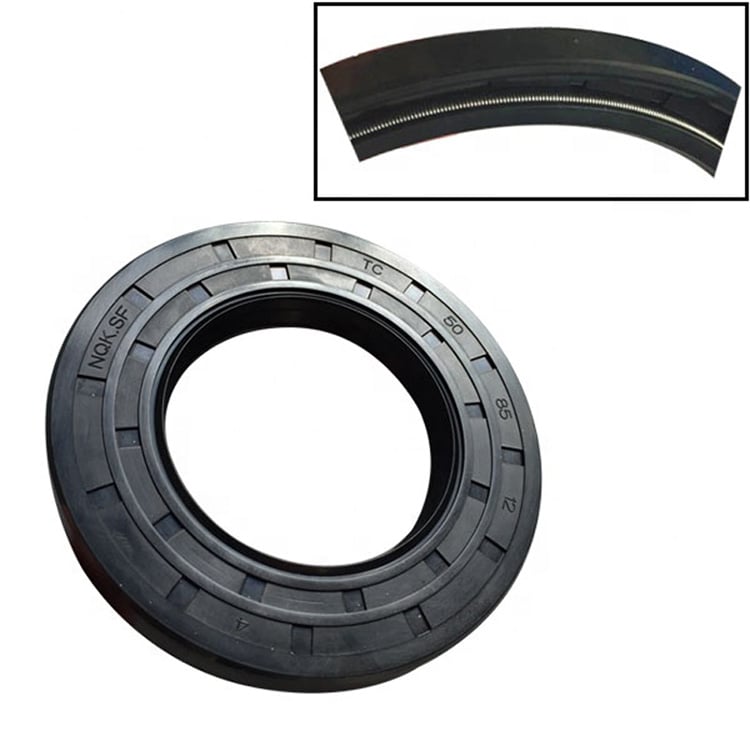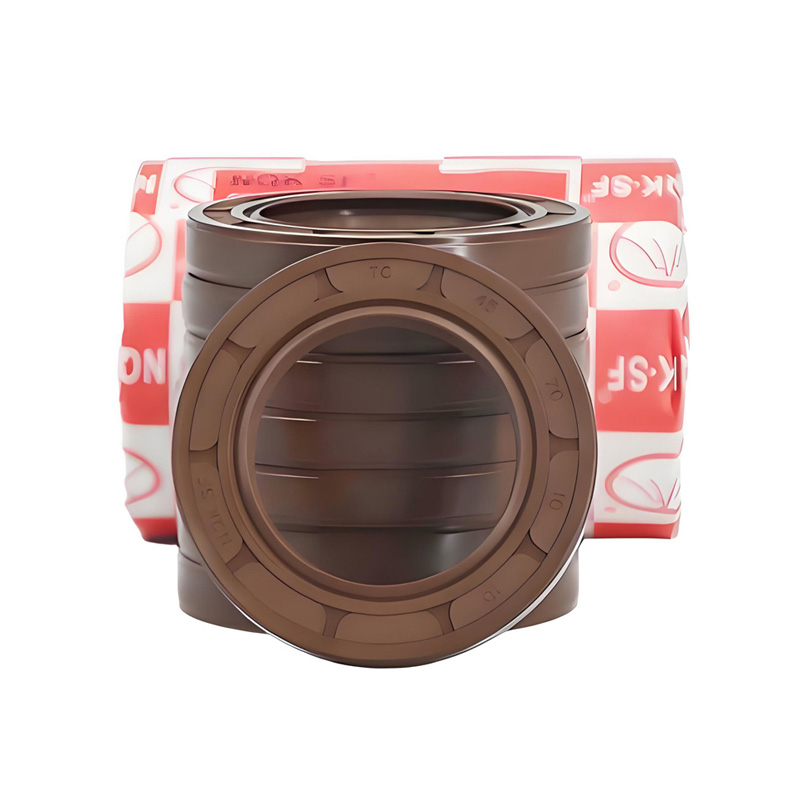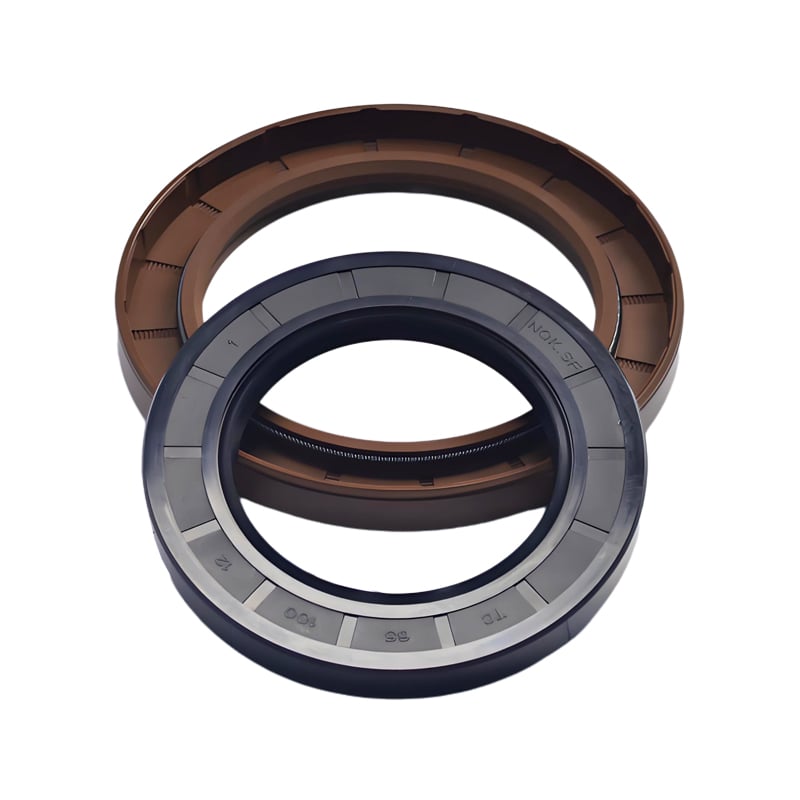

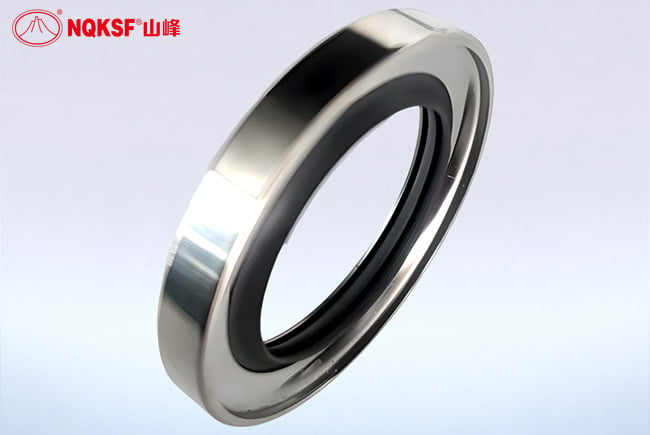
Conventional elastomer oil seals are suitable for a wide range of industrial equipment, but not every rotary application has moderate temperature, moderate speed, and compatible lubricants. When operating conditions become more demanding, a PTFE-based shaft seal with a stainless steel structure may be worth considering.
The reason is not simply that PTFE is a “higher performance” material. Its low-friction characteristics and broad chemical resistance can make it appropriate for applications where a conventional elastomer lip has limitations.
Where Conventional Rubber Seals May Become Challenging
A traditional rubber sealing lip depends on controlled elastic contact with the shaft. As temperature, speed, chemical exposure, or other operating conditions become more severe, the material and lip design become increasingly important.
High shaft speed can increase frictional heat. Certain fluids may also challenge the compatibility of an elastomer. In these situations, changing from one rubber compound to another may help, but it may not always address the complete operating requirement.
The solution therefore needs to consider both the material and the seal structure.
What PTFE Brings to the Design
PTFE has a low coefficient of friction and broad chemical resistance compared with many conventional elastomers. These properties are useful in demanding rotary applications.
PTFE layer can reduce frictional heat and wear at the sealing lip and can also broaden fluid compatibility. Its PTFE sealing materials are offered for applications involving challenging conditions and high-speed, low-pressure rotary sealing.
That does not mean PTFE seals are automatically suitable for every high-temperature or high-speed machine. Seal geometry, shaft condition, installation, pressure, lubrication, and the exact PTFE formulation still need to be considered.
Why Stainless Steel Is Used
The stainless steel portion of a PTFE stainless shaft seal provides the structural part of the seal and offers corrosion resistance that can be useful in demanding environments.
This can be relevant in equipment exposed to moisture, chemicals, temperature cycling, or other conditions where the surrounding structure needs greater resistance than a conventional carbon-steel case may provide.
The combination of a PTFE sealing element and stainless steel structure therefore addresses two different requirements: the sealing interface and the mechanical environment around the seal.
Typical Application Areas
PTFE stainless shaft seals can be considered in applications such as pumps, compressors, motors, gearboxes, fans, industrial machinery, and other rotating equipment where low friction, chemical resistance, or demanding operating conditions are important.
NQKSF lists PTFE stainless shaft seals among its industrial sealing products and describes applications including pumps, motors, gearboxes, agricultural and construction equipment, wind-turbine drivetrains, and other industrial machinery.
The exact suitability still depends on the operating parameters. A seal should not be selected solely because the equipment belongs to one of these industries.
PTFE Does Not Eliminate the Need for Correct Shaft Design
One common misunderstanding is that a PTFE seal can compensate for poor shaft conditions.
It cannot.
The shaft surface, hardness, runout, installation geometry, and sealing direction still affect the performance of a rotary seal. PTFE formulations with abrasive fillers can also require particular attention to the counterface material.
For this reason, PTFE should be viewed as part of an engineered sealing system rather than simply a substitute for NBR or FKM.
Choosing the Material According to the Machine
A PTFE stainless steel shaft seal becomes relevant when the application requires characteristics that a conventional elastomer seal may not provide efficiently, particularly where friction, chemical exposure, temperature, or speed are important factors.
The correct choice still begins with the actual machine conditions. Temperature, shaft speed, pressure, fluid, shaft material, surface condition, and installation space should all be considered before deciding on the seal structure and material.
For equipment operating under demanding conditions, this application-based approach is more useful than choosing a seal simply because its material has a higher specification on paper.
 Hot News
ShanFeng Special Rubber Products Co., Ltd., operating under brand NQKSF since 1990, is a global leader in the sealing industry.
Copyright © 2026 ShanFeng Special Rubber Products Co., Ltd. All rights reserved. Privacy Policy
 EN
EN