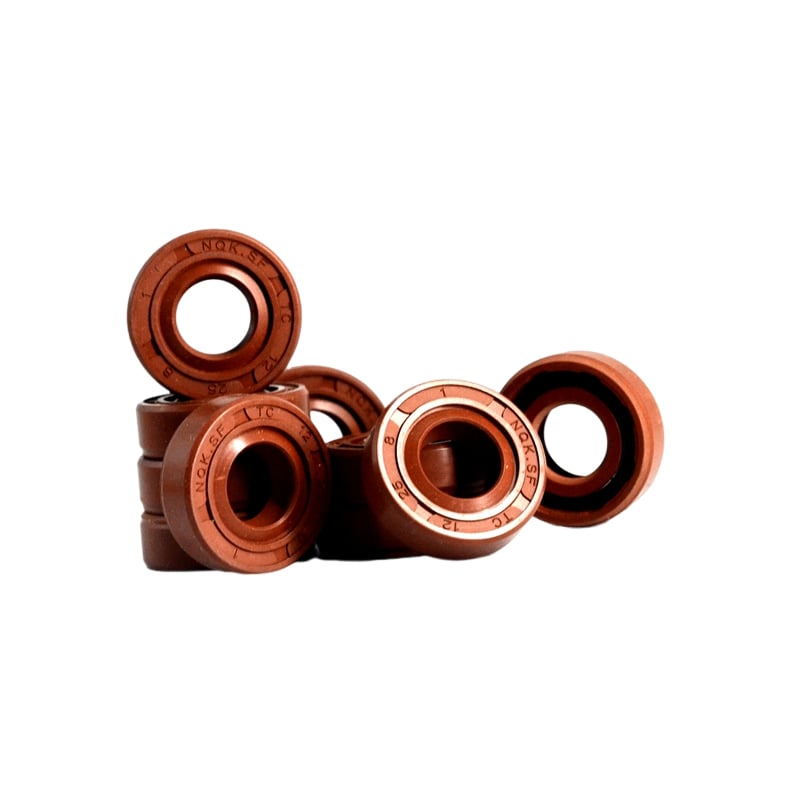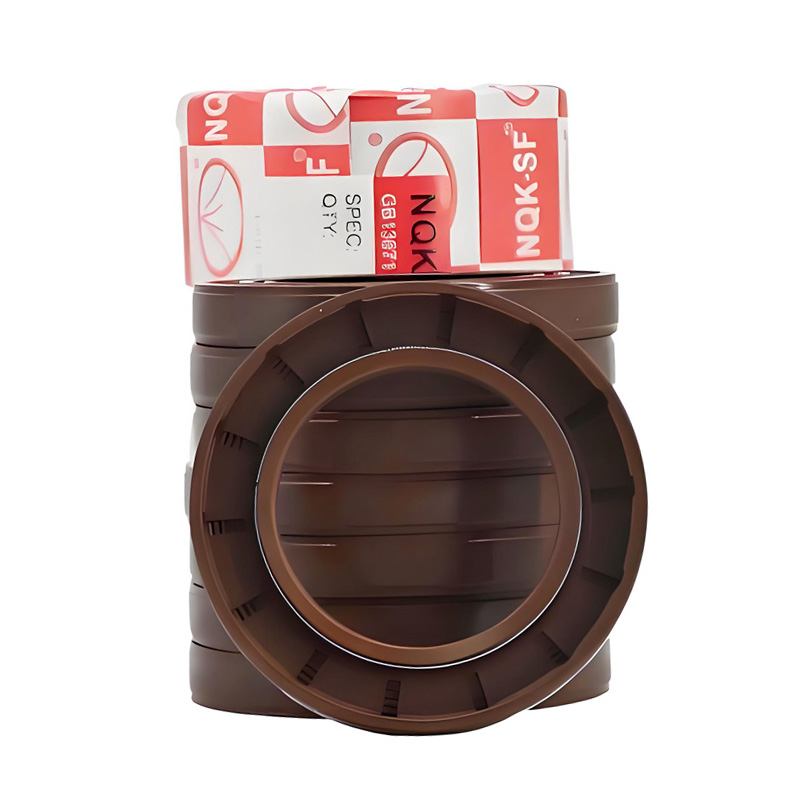

The material of an oil seal directly affects how well the sealing lip can maintain its properties under actual working conditions. It influences resistance to the working fluid, temperature behavior, flexibility, wear and aging. For this reason, choosing the correct material can be just as important as choosing the correct oil seal dimensions.
An oil seal operates through a flexible lip that remains in contact with a moving shaft. That lip cannot simply be made from any rubber material. It has to deform sufficiently during installation, maintain contact during shaft rotation and tolerate the lubricant and temperature surrounding it.
This is where the difference between materials becomes important.
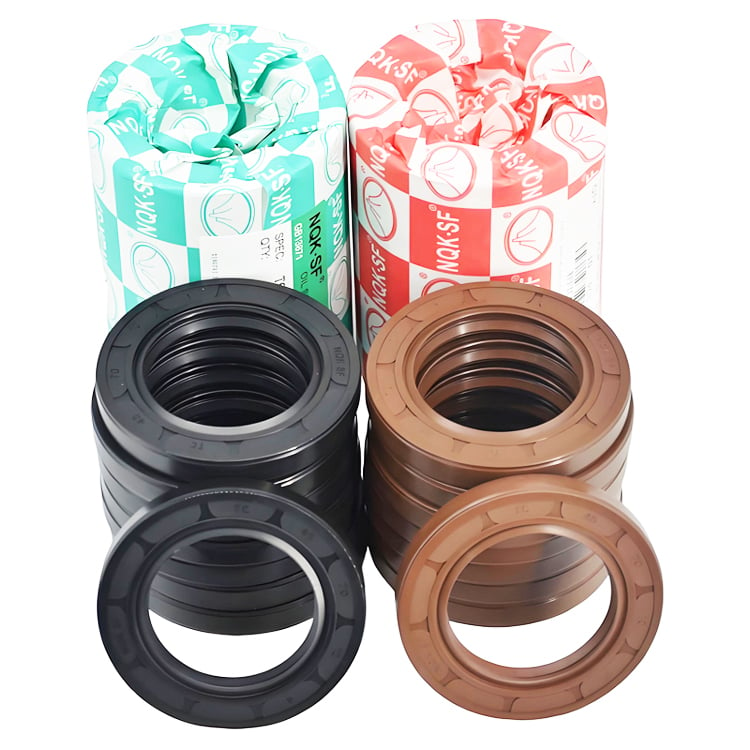
NBR is widely used for general-purpose oil seals because it has good compatibility with many mineral oils, greases and petroleum-based lubricants. It also provides useful mechanical properties for dynamic sealing. When the working temperature and medium are within the material's suitable range, NBR can be a practical choice for industrial machinery, motors, gearboxes and many general rotary sealing applications.
FKM takes a different position in material selection. It is often considered when the seal is exposed to higher temperatures or fluids that place greater demands on chemical resistance. In such situations, FKM can retain useful sealing properties where a conventional NBR compound may not provide the required service performance. However, that does not mean FKM should automatically replace NBR in every application. The working conditions should determine the material.
Temperature is particularly important because rubber properties change as the operating temperature changes. Excessive heat can accelerate aging and affect elasticity. If the sealing lip becomes too hard or loses its ability to follow the shaft properly, the contact condition can deteriorate. On the other hand, the material also has to remain suitable at the lowest operating temperature. A seal that works well when warm may behave differently during cold startup.
The fluid itself creates another material-selection question. Two machines may operate at the same temperature and shaft speed but use different lubricants. Their seal requirements may therefore be different. Oil additives, synthetic fluids, fuels, water-based media and other chemicals can interact differently with elastomers. A material that has good oil resistance is not automatically suitable for every fluid.
Wear resistance also matters because the lip is working against a moving shaft. During operation, friction and heat are generated at the contact area. If the material is poorly matched to the speed, lubrication or shaft condition, wear can accelerate. In other words, material selection is connected to the mechanical design of the seal rather than being an independent choice. Radial shaft seal performance is affected by the combined conditions of material, speed, lubrication, temperature and shaft surface.
The material can also influence what happens as the seal ages. Changes in elasticity, swelling, hardening or permanent deformation can alter the lip's contact with the shaft. This is why selecting an oil seal only by its dimensions can lead to problems. A seal may fit the shaft and housing correctly but still be unsuitable for the actual lubricant or temperature.
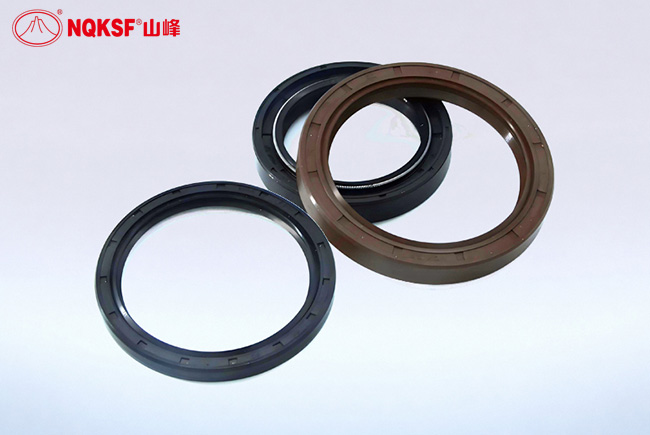
For example, an NBR seal and an FKM seal may have identical nominal dimensions and the same basic TC structure, yet they are not interchangeable in every application. The dimensions determine whether the seal fits mechanically; the material determines whether the sealing element can tolerate the working environment.
Therefore, oil seal material affects sealing performance by controlling how the sealing lip responds to the actual combination of fluid, temperature, speed and mechanical contact. Correct material selection does not mean choosing the most expensive or technically demanding compound. It means matching the elastomer to the conditions the seal will actually experience.
 Hot News
ShanFeng Special Rubber Products Co., Ltd., operating under brand NQKSF since 1990, is a global leader in the sealing industry.
Copyright © 2026 ShanFeng Special Rubber Products Co., Ltd. All rights reserved. Privacy Policy
 EN
EN