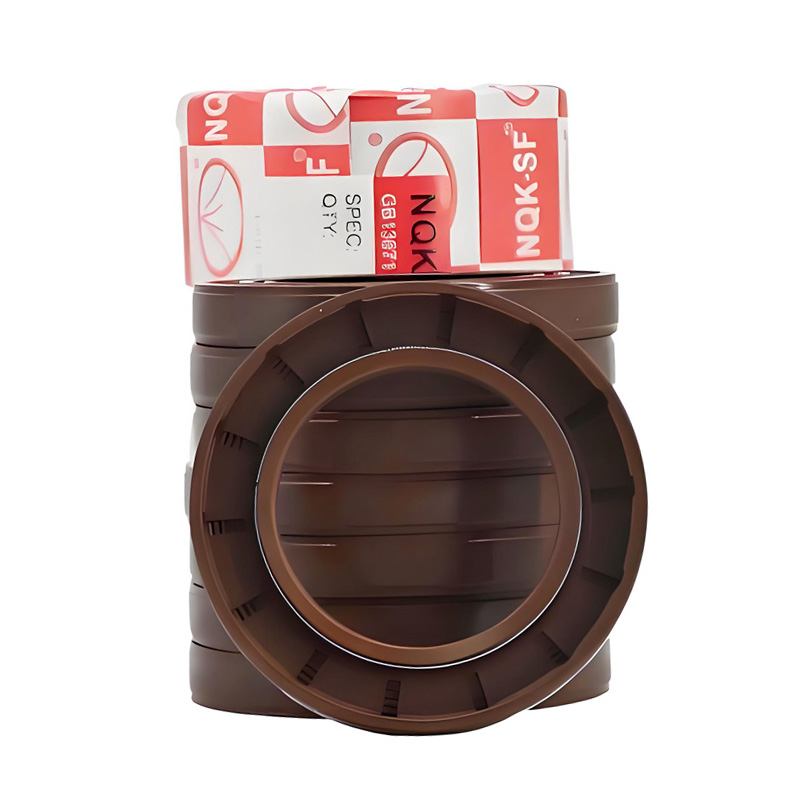

In sealing systems, the skeleton oil seal (also known as a rotary shaft seal) plays a critical role. It must not only prevent the leakage of lubricants but also block the intrusion of external contaminants such as dust and moisture. While many believe that sealing performance depends mainly on material and structural design, the true core lies in the sealing mechanism at the lip and the proper design of the interference fit.
This article provides a systematic analysis of the sealing mechanism and lip interference design of skeleton oil seals from an engineering application perspective, helping you avoid common pitfalls in selection and design.
Structural Parameters of skeleton oil seals
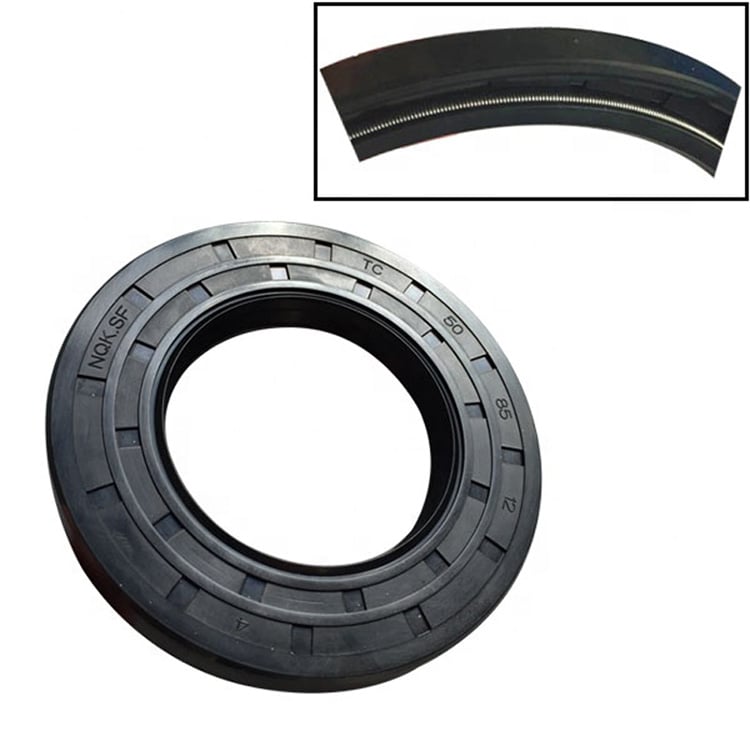
The structural design of a skeleton oil seal directly affects its sealing performance and service life. Key aspects include:
Lip Type
Single Lip: Suitable for general sealing applications
Double Lip (with dust lip): Ideal for environments with external contaminants such as dirt, water, or mud
Spring Inclusion
With Spring (e.g., TC, TB types): Provides continuous radial preload, suitable for high-speed or high-pressure conditions
Without Spring: Used in low-speed, low-pressure, or static sealing applications
Lip Angle and Thickness These parameters influence oil film formation and oil return capability, and are critical for achieving dynamic sealing performance.
Definition and Reference Range of Lip Interference
Lip interference refers to the dimensional difference between the oil seal’s inner diameter in its free state and the actual shaft diameter. It determines the contact pressure between the lip and the shaft, forming the basis of sealing performance.
Typical Reference Range (for standard rotary oil seals)
Radial interference (single side): approximately 0.2 to 0.4 mm
Corresponding diameter interference: approximately 0.4 to 0.8 mm
Properly designed interference ensures effective sealing while minimizing friction and wear, thereby extending service life.
Fit Parameters and Operating Conditions
Several factors significantly influence sealing performance in real-world applications:
Shaft Surface Roughness: Recommended Ra between 0.2 and 0.8 μm. Surfaces that are too rough or too smooth can destabilize the oil film.
Shaft Diameter Tolerance and Concentricity: Must meet standard specifications to avoid eccentric wear.
Operating Speed and Temperature: High-speed or high-temperature conditions require careful material selection and interference design.
Sealing Medium Characteristics: Lubricant viscosity and additives can affect oil film behavior.
Sealing Mechanism: Dynamic Oil Film Sealing
skeleton oil seals do not rely solely on tightly compressed lips for sealing. Instead, they function through a combination of mechanisms:
Initial contact pressure generated by lip interference
Formation of a thin oil film between the lip and the rotating shaft
The oil film reduces friction and creates an inward pumping effect
The spring provides continuous compensation for lip wear, maintaining stable contact
This dynamic oil film sealing mechanism is the foundation of long-term, reliable performance.
Common Issues Caused by Improper Interference
Excessive Interference
Increased friction and heat generation
Accelerated lip wear and shortened service life
Early failure under high-speed conditions
Insufficient Interference
Inadequate contact pressure and poor sealing
Unstable oil film, leading to leakage or oil flinging
Spring compensation may be insufficient to maintain sealing
Therefore, interference must be carefully balanced to ensure both sealing effectiveness and durability.
Key Factors Affecting Interference Design
Shaft Speed: Reduce interference at high speeds to lower friction and heat generation
Operating Temperature: Increase interference slightly in high-temperature environments due to rubber softening
Sealing Medium: Low-viscosity fluids require more stable contact pressure
Rubber Material: Nitrile rubber suits standard designs; fluororubber requires more precise interference
Spring Inclusion: Seals with springs are less dependent on body interference and offer greater adaptability
Typical Application Scenarios
skeleton oil seals are widely used in the following rotary sealing applications:
Automotive engines, transmissions, and electric drive systems
Industrial motors, pumps, and fans
Gearboxes, drive shafts, and various mechanical shaft ends
In these environments, oil seals must not only prevent lubricant leakage but also maintain stable performance under high-speed, high-temperature, and high-pressure conditions.
The sealing performance of a skeleton oil seal depends on both a well-designed lip structure and precisely calculated interference. Together, they form a stable oil film sealing system that ensures efficient and reliable equipment operation.
In practical engineering, it is recommended to consider operating conditions, shaft dimensions, and material properties when designing and verifying interference. Only through scientific interference design can the optimal balance between sealing reliability and service life be achieved.
If you are currently working on oil seal selection, sealing structure optimization, or troubleshooting sealing failures, feel free to reach out. Let’s explore more efficient solutions together.
 Hot News
ShanFeng Special Rubber Products Co., Ltd., operating under brand NQKSF since 1990, is a global leader in the sealing industry.
Copyright © 2026 ShanFeng Special Rubber Products Co., Ltd. All rights reserved. Privacy Policy
 EN
EN