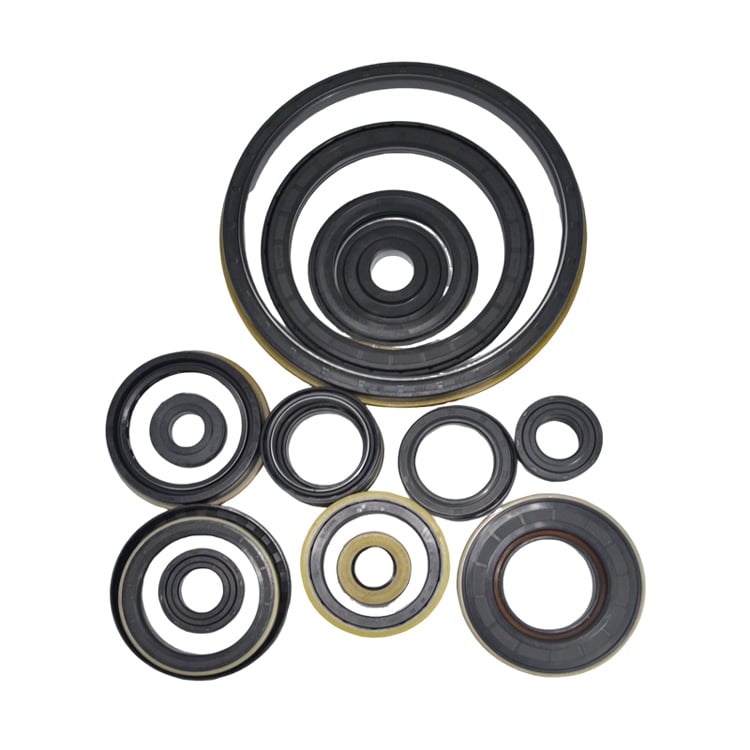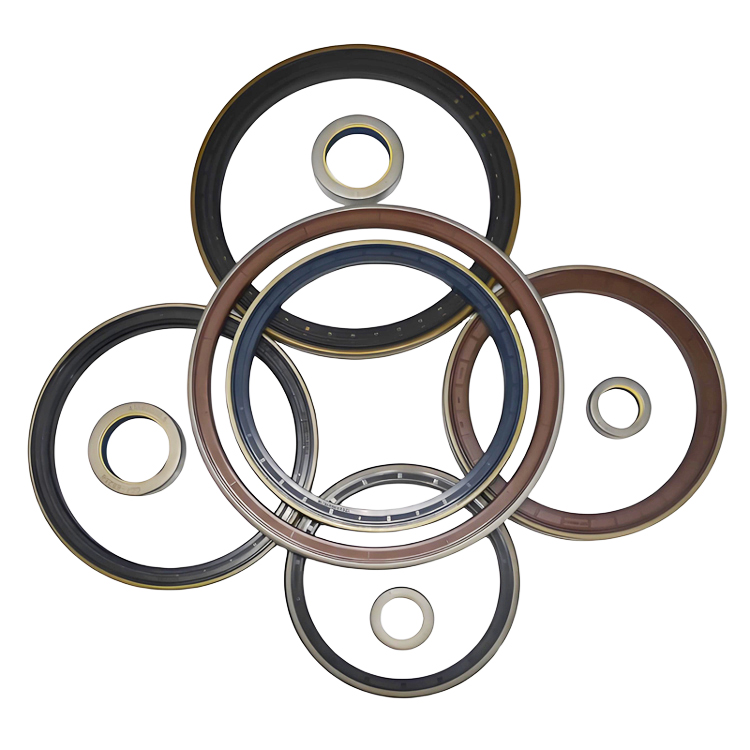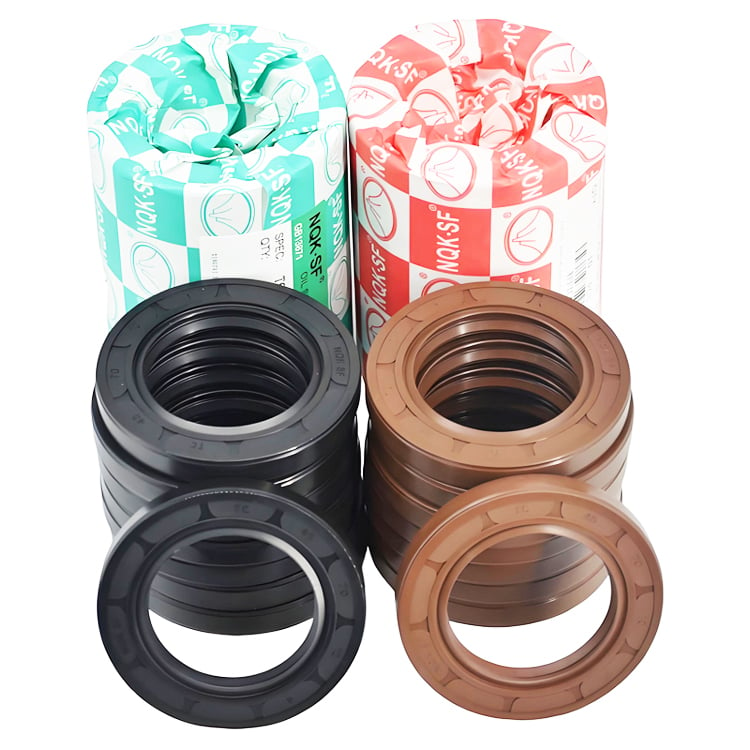

For industrial power equipment, the right motor oil seal should be selected by looking at how the motor actually operates: how fast the shaft rotates, what lubricant is present, how hot the sealing area becomes, what contaminants are nearby, and how long the equipment runs each day. A seal that works in a small general-purpose motor may not be suitable for a continuously running industrial motor under a heavier load.
Industrial motors often drive pumps, fans, compressors, conveyors, gearboxes, and other equipment. Their operating conditions can therefore vary considerably. A motor running a fan in a clean indoor environment may have relatively straightforward sealing requirements, while a motor driving agricultural or construction equipment may encounter dust, moisture, vibration, and temperature changes.
Shaft speed should be considered early in the selection process. The seal lip slides against the rotating shaft throughout operation, so the contact generates friction. At higher speeds, the resulting heat and wear become more important. Lip geometry, lubrication, shaft finish, and material selection all contribute to the way the seal behaves.
The lubricant is another key consideration. The oil seal must be compatible with the grease or oil used around the bearing or other rotating assembly. If the lubricant changes during equipment maintenance, the replacement seal should also be checked for compatibility rather than assumed to be interchangeable.
Temperature and duty cycle should be considered together. A motor that reaches a certain temperature for a few minutes is not exposed to the same thermal conditions as a motor operating continuously at that temperature for many hours. Long-term heat exposure can accelerate aging of elastomer materials, so the expected operating pattern should be part of the selection discussion.
The surrounding environment determines whether contamination protection is needed. In dusty or wet industrial environments, a seal with an additional outer lip may help reduce the entry of external contaminants. In a clean environment, a simpler construction may be sufficient. At the same time, additional lip contact can increase friction, so the environmental benefit should be balanced against the motor's speed and thermal conditions.
The condition of the shaft and bearings should also be checked before replacing a failed oil seal. If a bearing is worn or the shaft has excessive movement, the new seal may continue to leak. Similarly, a worn shaft surface can damage the new sealing lip. In these situations, the sealing problem may be mechanical rather than a simple material or profile issue.
For procurement, a useful specification should therefore go beyond terms such as “motor oil seal” or “industrial oil seal.” Provide the supplier with the shaft diameter, shaft speed, lubricant, temperature range, operating hours, contamination level, pressure condition, and installation dimensions. These details allow the manufacturer to determine whether a standard NBR oil seal is appropriate or whether an FKM, double-lip, or specialized rotary seal should be considered.
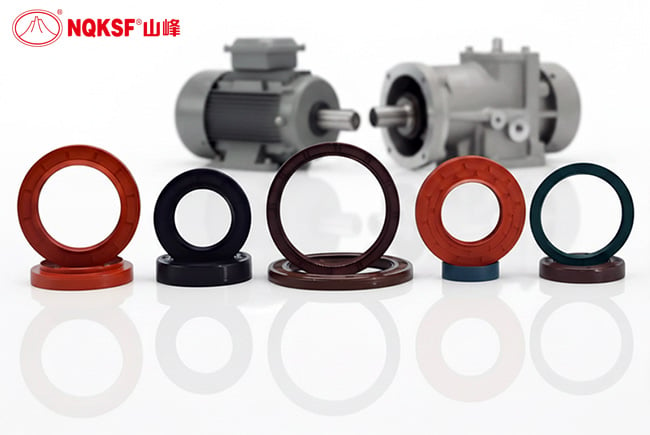
The practical objective is not to select the most complicated seal. It is to select a seal whose profile, material, and dimensions fit the actual operating conditions of the motor. That is what makes an oil seal suitable for industrial power equipment.
 Hot News
ShanFeng Special Rubber Products Co., Ltd., operating under brand NQKSF since 1990, is a global leader in the sealing industry.
Copyright © 2026 ShanFeng Special Rubber Products Co., Ltd. All rights reserved. Privacy Policy
 EN
EN