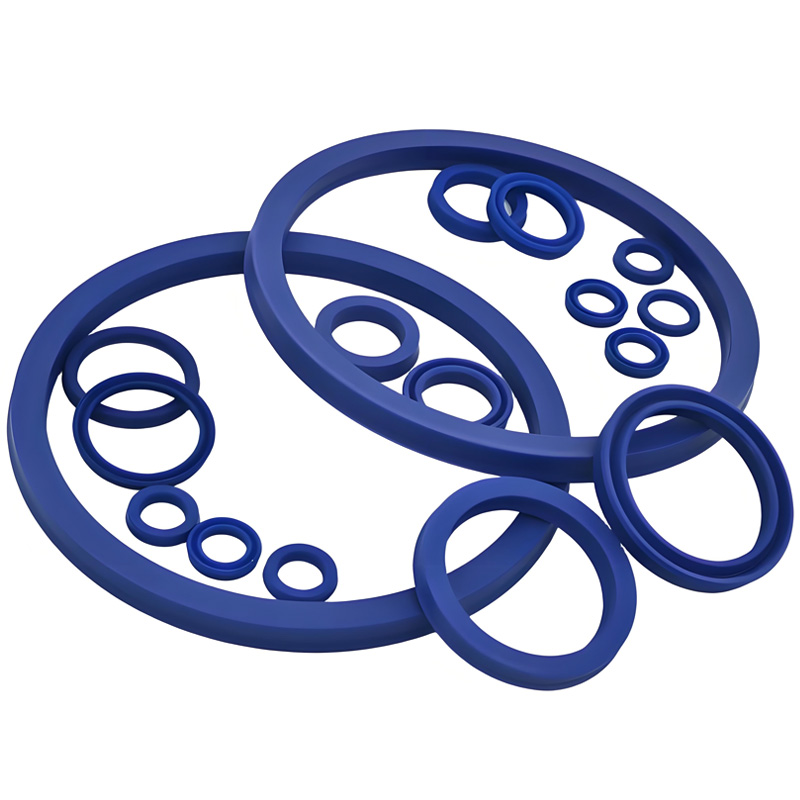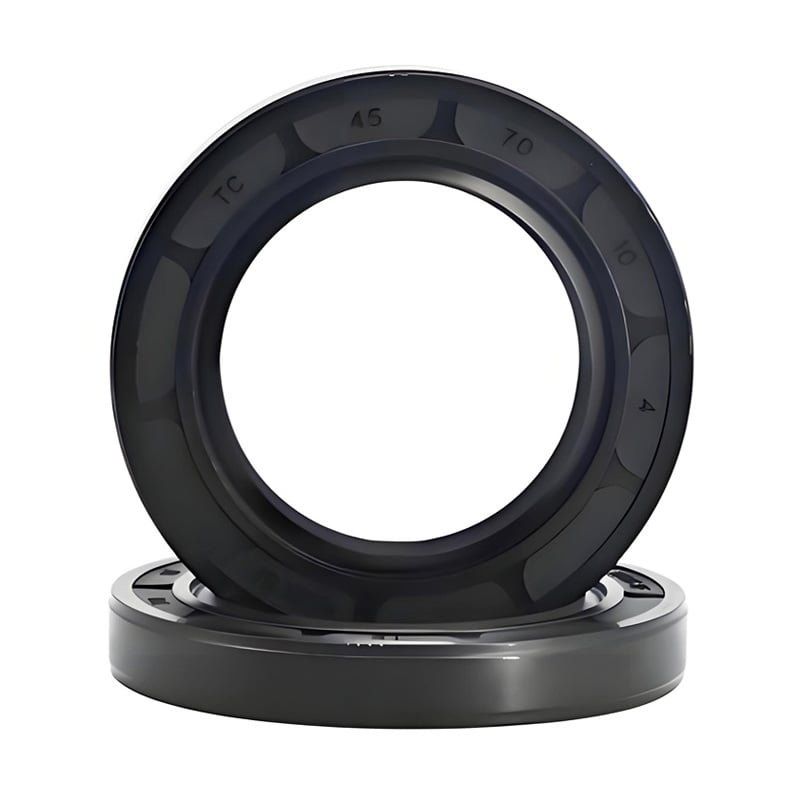

The right sealing ring should be selected according to the working conditions of the equipment, not simply by matching the size. Temperature, pressure, medium, movement, installation space, and contamination level all influence whether a sealing ring can work reliably. For industrial applications, the selection process should begin with the operating environment and then move toward material, profile, dimensions, and supplier capability.
A seal that looks suitable on a drawing may behave very differently once the machine starts running.
Start with the medium, not the seal material
One of the first questions in seal selection should be: What fluid will the seal contact?
Hydraulic oil, mineral oil, water, grease, fuel, chemicals, and compressed air can have very different effects on elastomer materials.
For example, NBR is widely used in applications involving mineral oils and lubricants, while FKM is often considered when higher temperature resistance or broader chemical compatibility is required.
However, material names alone are not enough. Different compounds made from the same base polymer can have different formulations and performance ranges.
This is why a supplier should be able to provide material information rather than simply saying that a product is “oil resistant.”
Temperature changes the selection
Temperature is another factor that should be checked against the actual sealing position.
The temperature of the machine itself does not necessarily represent the temperature experienced by the seal. A seal installed close to a bearing, engine component, hydraulic circuit, or high-speed shaft may encounter considerably different conditions.
At elevated temperatures, elastomer properties can change over time. At low temperatures, flexibility may become an issue.
The correct approach is to consider the normal operating temperature, possible temperature peaks, and exposure duration rather than choosing a material based only on a nominal temperature figure.
Movement determines the seal structure
A sealing ring used in a static joint faces a different problem from one installed around a moving shaft.
For static sealing, compression and material compatibility are important. For dynamic applications, friction, wear, surface condition, lubrication, and movement speed become much more significant.
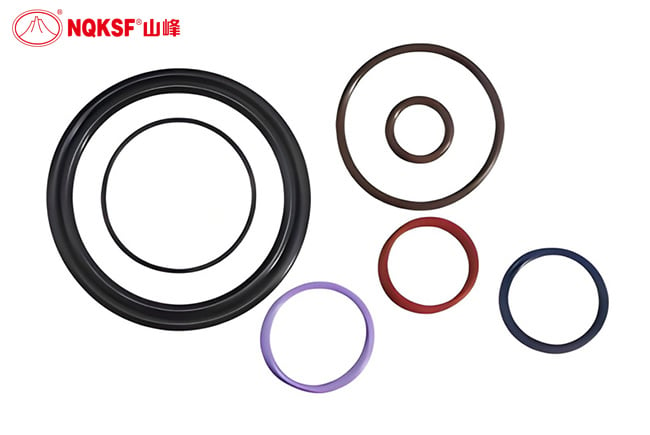
O-rings, for example, can be used in both static and dynamic applications, but the groove design, compression, clearance, lubrication, and movement conditions must be appropriate for the specific application.
This is why simply asking a supplier for “an O-ring of this size” may not provide enough information for a demanding industrial application.
Pressure and clearance should be considered together
Pressure can deform an elastomer seal into an available clearance gap.
As pressure increases, extrusion resistance becomes increasingly important. The groove dimensions, material hardness, clearance, and pressure level work together to determine whether the seal remains stable.
In some applications, a harder compound or backup ring may be considered to control extrusion.
Therefore, pressure should never be evaluated independently from the installation geometry.
The installation environment matters more than many buyers expect
A sealing ring can be correctly specified but damaged during installation.
Sharp edges, incorrect lubrication, excessive stretching, twisting, contaminated grooves, or unsuitable tools can damage the sealing surface before the equipment even starts operating.
For industrial procurement, it is therefore useful to ask whether the supplier can provide dimensional information and installation guidance for the selected seal.
A supplier that understands the installation environment can often help identify risks that are not visible from the product drawing alone.
Supplier selection should follow technical selection
Once the operating conditions are clear, supplier evaluation becomes much easier.
A suitable supplier should be able to answer practical questions such as:
Which material is recommended for the specified medium?
What temperature range is appropriate for the compound?
Is the product suitable for static or dynamic sealing?
What dimensional standards are available?
Can batch consistency be controlled?
How are incoming materials and finished seals inspected?
The goal is not to find a supplier that offers the largest catalog. It is to find one that can connect application conditions with the correct sealing solution.
For industrial buyers, a good sealing decision is therefore built in this order:
Application → operating conditions → seal design → material → dimensions → supplier capability.
That sequence reduces the risk of choosing a seal based purely on price or appearance.
 Hot News
ShanFeng Special Rubber Products Co., Ltd., operating under brand NQKSF since 1990, is a global leader in the sealing industry.
Copyright © 2026 ShanFeng Special Rubber Products Co., Ltd. All rights reserved. Privacy Policy
 EN
EN