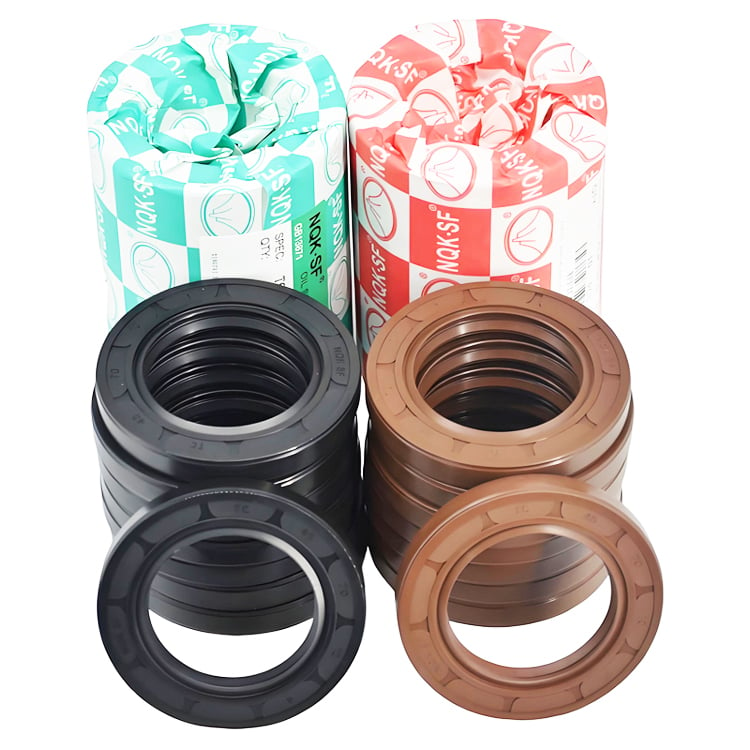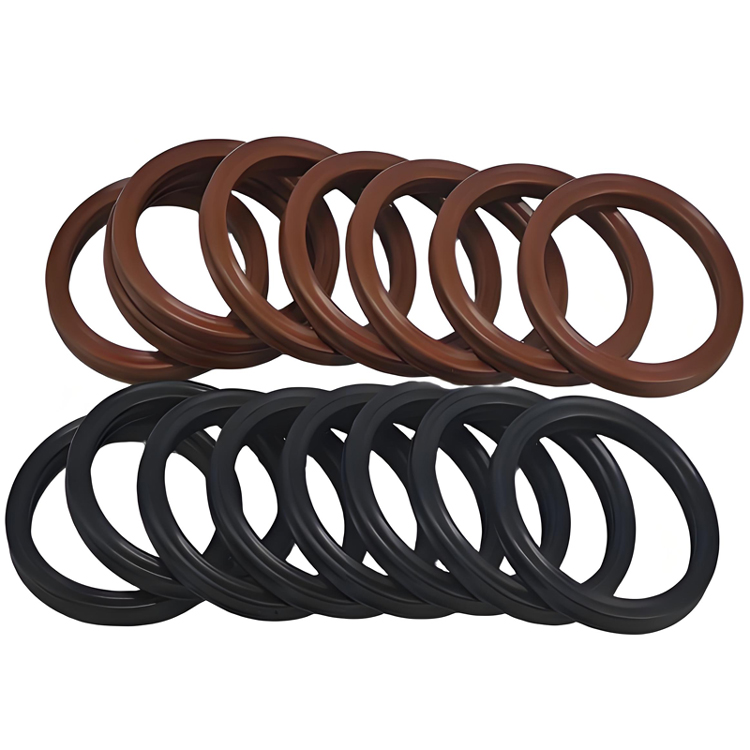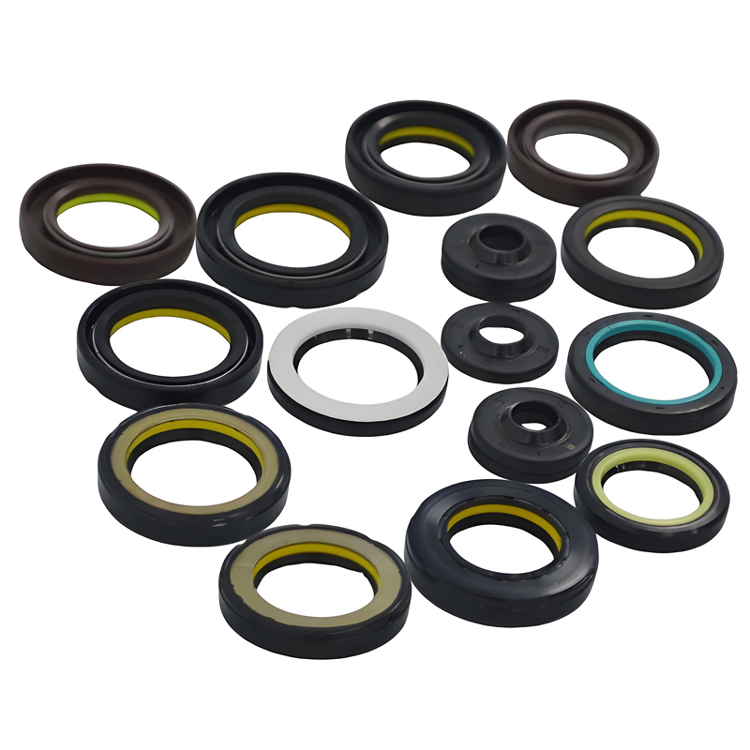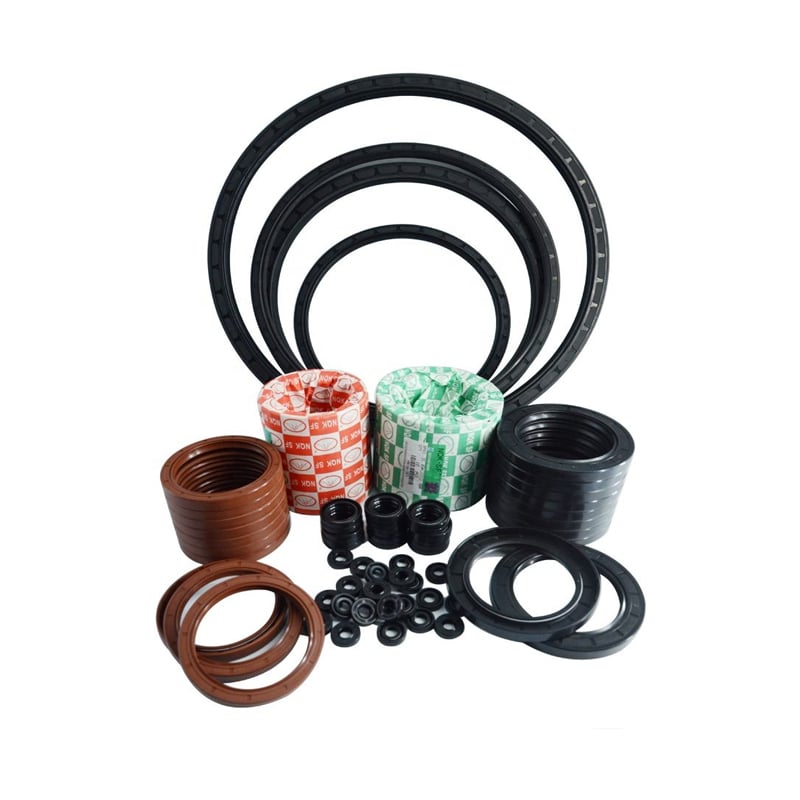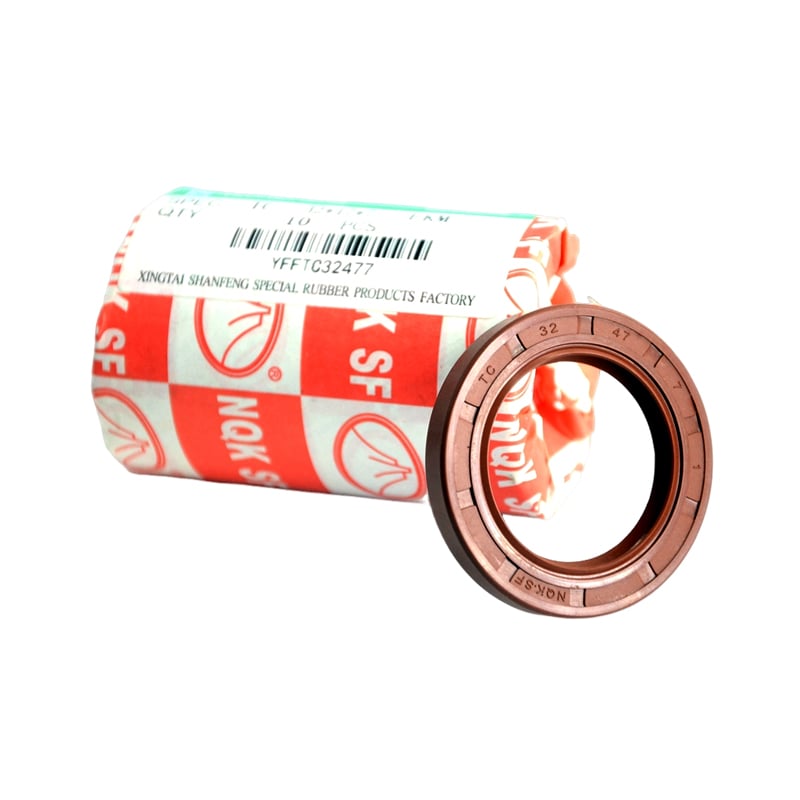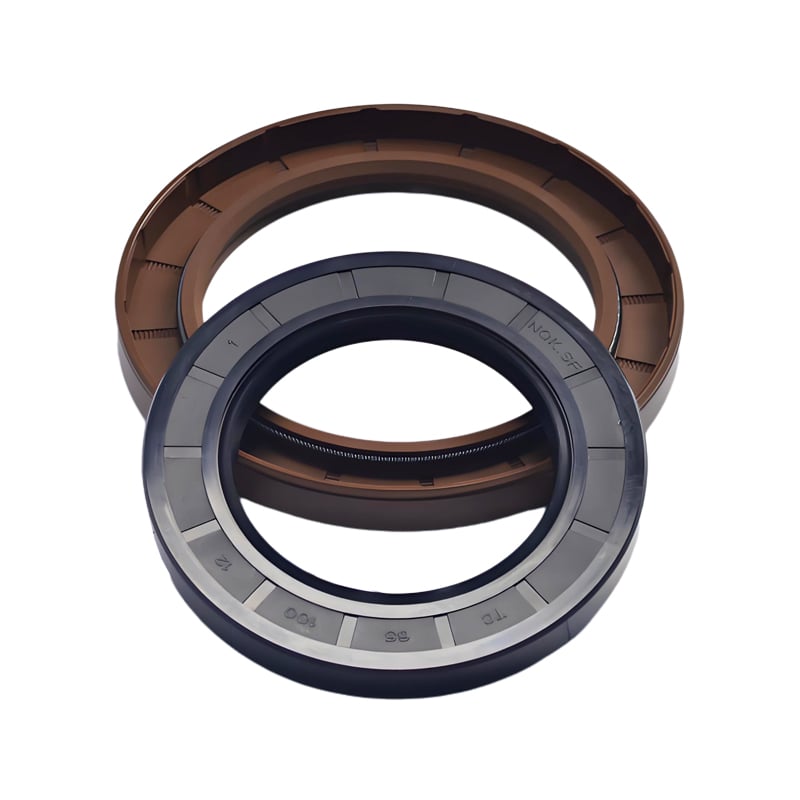

The main types of oil seals can be understood by looking at how they are built and what problem they are designed to solve. Common radial oil seal profiles include single-lip and double-lip designs such as SC and TC, while other constructions are developed for different installation conditions, contamination levels, pressures, speeds, or movement patterns.
There is no single “standard oil seal” that covers every machine. The profile is normally selected according to how the shaft moves and what the sealing area has to withstand.
Single-lip and double-lip designs
One of the easiest ways to understand oil seal types is to look at the number of functional lips.
A single-lip seal mainly focuses on retaining lubricant around the shaft.
A double-lip design adds a secondary dust lip outside the main sealing lip. TC is a familiar example: the main lip is responsible for lubricant retention, while the outer lip helps reduce the entry of dust and other contaminants.
This difference becomes useful when choosing a seal for the working environment.
A relatively clean machine may not require the same contamination protection as equipment operating outdoors or around dust and debris.
Rubber-covered and metal-exposed constructions
Oil seals can also differ in how their outer diameter is constructed.
Some designs have a rubber-covered outside diameter, while others use a more exposed metal case.
A rubber-covered outside diameter can help provide sealing between the seal and housing and can be useful where housing conditions or installation requirements call for that type of construction.
Metal-case designs, meanwhile, can provide a different installation and dimensional behavior.
The important point is that the outside diameter is not merely a visual difference. It is part of how the seal interacts with the housing.
Spring-loaded oil seals
Many radial oil seals use a garter spring around the sealing lip.
Its purpose is to help maintain radial contact between the lip and the rotating shaft. Trelleborg describes conventional radial oil seals as constructions involving a rubber sealing lip, metal case, and tensioning spring, with versions available with or without an external dust lip.
Spring-loaded designs are common because shaft rotation, rubber elasticity, temperature changes, and wear can all influence the contact condition at the lip.
The spring helps maintain the required contact force as operating conditions change.
Oil seals for different types of movement
Not every seal application involves simple continuous rotation.
Rotary shaft seals are intended for rotating components, but sealing products also exist for oscillating or reciprocating movement.
This distinction matters because a sealing lip behaves differently when the shaft rotates continuously compared with when a rod moves back and forth.
Trelleborg's rotary and shaft seal portfolio, for example, includes radial oil seals as well as products designed for other movement patterns and sealing arrangements.
Choosing a rotary oil seal for a reciprocating application simply because the dimensions appear similar can therefore create problems.
Special-purpose oil seals
Beyond conventional rubber radial seals, there are designs using different materials and structures for more demanding conditions.
PTFE-based rotary seals, for example, can be considered where chemical resistance, high-speed operation, or other specialized requirements make a conventional elastomer seal less suitable.
There are also heavy-duty seals, mechanical oil seals, V-rings, and other rotary sealing solutions.
These products should not be treated as interchangeable versions of the same oil seal. Each construction solves a somewhat different sealing problem.
How should an oil seal type be selected?
A useful way to approach oil seal selection is to start with the machine rather than the catalog name.
Ask:
What is moving?
Is it a continuously rotating shaft, an oscillating shaft, or a reciprocating rod?
What needs to stay inside?
Oil, grease, hydraulic fluid, or another medium?
What is outside the seal?
Clean air, dust, water, mud, or abrasive particles?
How severe is the operating condition?
Consider temperature, speed, pressure, lubricant, shaft condition, and available installation space.
Once these factors are known, the suitable profile becomes much easier to identify.
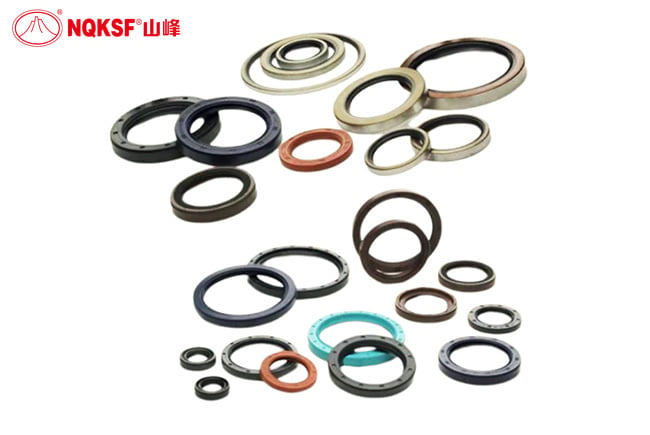
That is why oil seal catalogs contain many profiles instead of one universal design. The differences between SC, TC, specialized rotary seals, PTFE-based seals, and other constructions are not simply naming variations—they reflect different ways of controlling leakage and protecting the sealing interface.
 Hot News
ShanFeng Special Rubber Products Co., Ltd., operating under brand NQKSF since 1990, is a global leader in the sealing industry.
Copyright © 2026 ShanFeng Special Rubber Products Co., Ltd. All rights reserved. Privacy Policy
 EN
EN